









DOUBLE CROSS: Movie Review of Enemy by Howard Casner
Posted: March 23, 2014 | Author: Donald | Filed under: Uncategorized | Tags: Denis Villeneuve, Enemy, Isabella Rossellini, Jake Gyllenhaal, Javier Guillon, Melanie Laurent, Sarah Gadon | 1 Comment »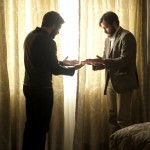 Before I begin, a quiz:

Let’s say that you were watching a movie and you saw someone in said movie that was the spitting image of yourself, and I mean, as far as you can tell, he could be your identical, not fraternal, twin. You know, like in that movie starring Haley Mills (okay, okay, if you really feel the need to brag and say you are too young to have seen that, then the one starring Lindsay Lohen). Would you: Read the rest of this entry »
PEOPLE COME, PEOPLE GO. NOTHING EVER HAPPENS: Movie Review of The Grand Budapest Hotel by Howard Casner
Posted: March 20, 2014 | Author: Donald | Filed under: Uncategorized | Tags: Adrian Brody, Alexandre Desplate, Bill Murray, Edward Norton, F. Murray Abraham, Harvey Keitel, Hugo Guinness, Jason Schwartzman, Jeff Goldblum, Jude Law, Owen Wilson, Ralph Feinnes, The Grand Budapest Hotel, Tom Wilkinson, Tony Revolori, Wes Anderson | 6,791 Comments »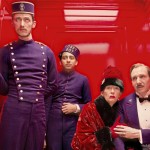 The Grand Budapest Hotel, the new demi-farce written by Wes Anderson and Hugo Guinness and directed by Anderson, is like a box of chocolates. The outside is lovely to look at, even entrancing, and when you open it up, the chocolate itself gleams with droolful anticipation.

And then you bite into one and sometimes you get the deep, rich double chocolate you have always dreamed of, and sometimes you get the sour cherry cream (or whatever ingredient you consider to be the one you grimace at and throw back in the box after taking one quick bite). Read the rest of this entry »
OH, THE LACK OF HUMANITY: Movie Reviews of Junk and Cecil B. DeMille’s Madam Satan by Howard Casner
Posted: March 17, 2014 | Author: Donald | Filed under: Uncategorized | Tags: Cecil B. Demille, Elsie Janis, George Hardy, Gladys Unger, Jeanie Macpherson, Junk, Kay Johnson, Kevin Hamedina, Madam Satan, Ramon Isao, Reginald Denny, Roland Young, Theodore Kosloff | 13 Comments » As far as I’m concerned, Junk, the new movie about the independent film and film festival world, is the perfect example of what is right and wrong with American indie cinema today (I say indie as opposed to independent to distinguish it from movies made on a higher budget through major independent production companies).
 Read the rest of this entry »

Of Mice and Frenchmen: Moview Reviews of Ernest & Celestine and Mauvais Sang by Howard Casner
Posted: March 14, 2014 | Author: Donald | Filed under: Uncategorized | Tags: Benjamin Renner, Daniel Pennac, Denis Lavant, Ernest and Celestine, Forest Whitaker, Gabrielle Vincent, Holy Motors, Julie Delpy, Juliet Binoche, Lauren Bacall, Leos Carax, Mackenzie Foy, Mauvais Sang, Megan Mullally, Michelle Piccolo, Nick Offerman, Paul Giamatti, Stephane Aubier, The Night is Young, Vincent Patar, William H. Macy | 2,148 Comments » In Ernest and Celestine, the Oscar nominated animated film from France, anthropomorphized bears dwell above ground, live like humans (one owns a candy store), and claim that mice fairies will come by in the night and leave money whenever a cub loses a tooth.

Meanwhile, anthropomorphized mice dwell in the sewers and steal bear teeth to use as dentures. Read the rest of this entry »
WORST DATES EVER: Movie Reviews of LUCKY BASTARD and IN FEAR by Howard Casner
Posted: March 14, 2014 | Author: Donald | Filed under: Uncategorized | Tags: Alice Englert, Allen Leech, Ashley Saint, David Katznelson, Iain De Caestecker, In Fear, Jay Paulson, Jeremy Lovering, Lucky Bastard, Lukas Kendall, Robert Nathan | 1,953 Comments »
Lucky Bastard, the new movie written by Lukas Kendall and Robert Nathan (who also directed) has one swell line of dialog. Someone rings a doorbell and the heroine (porn star and amateur averse Ashley Saint) says it’s the real estate woman. Our hero (the psychotic, premature ejaculator Dave G.) says, “no, it’s not the real estate woman”.
Exactly why this is such a bees’ knees and cats’ pajamas of a line will only be revealed upon seeing the movie. But trust me, it’s damn swell. Read the rest of this entry »
Movie Review of THE WIND RISES and JE T’AIME, JE T’AIME by Howard Casner
Posted: March 7, 2014 | Author: Donald | Filed under: Uncategorized | Tags: Alan Resnais, Claude Ridder, Hayao Miyazaki, Jacques Sternberg, Je t’aime je t’aime, Jiro Horikoshi, The Wind Rises | 961 Comments »If one is Japanese, I suppose The Wind Rises, the latest and quite possibly lastest animated movie from celebrated filmmaker Hayao Miyazaki (of Spirited Away, Howl’s Moving Castle, et al.) is about an aviation engineer who brought Japan into the 20th century in his design of airplanes.
For anyone else, quite possibly the movie is more about the events leading up to the invasion of China, the Rape of Nanking, the takeover of Korea, WWII and Pearl Harbor, though you might never know it by the often wistful comments made at times during the movie that rather vaguely refer to these events at all, some of which were quite possibly happening during the time period in which the movie takes place.
In many ways, The Wind Rises is like Martin Scorcese’s The Wolf of Wall Street, which is a story that built up to events that helped devastate the U.S. economy and ruined the lives of many people, but also a story that manages to leave out all that unpleasant stuff at the end.
The Wind Rises revolves around Jiro Horikoshi, who as a child dreamed of making huge airships and as an adult created, instead, sleek, metallic fighter planes and bombers. In Miyazaki’s version, Horikoshi is presented in terms of being a hero to youth everywhere, someone to aspire to, a biography that one might read when one is in elementary school of a celebrated role model, like a book about Edison and Carnegie that leaves out all the juicy parts.
There’s not a lot to Horikoshi, really. There’s no real inner conflict and not much of an outer one either. He wants to design and builds planes and very little stops him. Any obstacles are small and annoying, or irrelevant, rather than crises to overcome.
Even the prospect of a coming war and that he is helping prepare for it is little more than a passing whimsy of an occasional thought that is less than dimly annoying.
Of course, I can’t really blame Horikoshi for that. If I was in his shoes, and grew up where he did and when he did, I probably would have done the same thing and had as much inner turmoil over it as he does here.
So the portrait from that angle is probably an accurate one, but it’s not the most dramatic either and because of this, the story doesn’t always have a lot of forward momentum. It’s just a series of events, often low key ones, in Horikoshi’s life that are interesting at times, at others, less so.
Even Miyazaki seems to realize that not only might Horikoshi’s life not be the most inherently involving, but that his lack of conflict over the upcoming Japanese military action might also be problematic from a dramatic point of view, as about half way through, he completely changes the course of the story and turns it into a Dickensian romance as Horikoshi falls in love with Nohoki Satomi, a young woman with tuberculosis (the literary reference in the movie is Thomas Mann’s The Magic Mountain, but don’t let that fool you—the story line has Dora and David Copperfield written all over it).
Now, this has nothing to do with Horikoshi’s design of airplanes, but since that story wasn’t really going anywhere fast, why not change subjects and hope for the best?
But since the subject matter changes so abruptly, it takes awhile to catch on to the fact that a totally new movie has started with the result that it feels like Miyazaki is taking a bit too long to tell a rather simple story.
At the same time, The Wind Rises is still a must see and this is because of the magnificent and imaginative animation used to tell the story. It’s filled with surrealistic dreams and visions on one hand and intense detailed realism on the other. But even the detailed realism has a surrealistic edge to it as tears and sweat are as big as marbles and blood flows from a nose like it’s the Red Sea.
The look of The Wind Roses is exciting, stunning, at times transcendent. Even when one is losing interest in the story, it’s hard to lose interest in the visuals, with the highlight coming early on in a terrifying and devastating earthquake that hits Tokyo while Horikoshi is arriving by train to go to school. This is a series of scenes that are riveting, even searing. You’re both amazed at the artistry of it all while being emotionally overwhelmed by the event itself.
The Wind Rises is one of those films that may not quite work the way one would hope, but at the same time is quite worth seeing. It’s a visual triumph, even if it’s not quite a dramatic one.
In 1961, Alan Resnais gave the world that classic mind fuck of a movie (that also inspired the look of commercials for years to come), Last Year at Marienbad, about a man and woman who may or may not have met before, but who knows because the story is told in a surrealistic manner where time and logic or not supreme, to say the least.
Last Year… is a great movie, riveting, even when one doesn’t know what is going on, or what anything means or if it even means anything. I’ve seen it a number of times and each time I found it as mesmerizing as the first time I experienced it.
Well, in 1968, Alain Resnais, with a screenplay by Jacques Sternberg, tried to mind fuck one and all again in the movie Je t’aime je t’aime. But this time round, they’re not quite as successful.
The basic plot of I Love You, I Love You (as they say in English) involves Claude Ridder, an author (I think) who just tried to commit suicide and because of that, has become the perfect human lab rat to take part with other literal lab rats in a time travel experiment at a research center just outside of Paris.
And since Claude has no interest in life anymore, he goes, sure, why not? What have I got to lose, my life? Well, maybe this time I actually will.
He’s put into a strange, muslin covered type structure that looks vaguely like a brain monster from a 1950’s B sci-fi film. The idea is that he will travel back exactly one year for one minute, which will then prove that all those rats that did the same thing actually did do the same thing.
But something goes wrong and Claude is bounced all over the place, with no logic, rhyme or reason, over the past fifteen years of his life (for some reason, the movie doesn’t go far enough into his past such that a different actor would be required for the part). We then sort of get an idea as to why he ended up trying to end his life.
I make the story sound sillier than it is and I shouldn’t. It starts out very well, the whole thing written, directed and acted in a low key style that gives everything a certain realistic feel to it. It’s also filmed with that certain flatness that was becoming popular at the time and that always gave films of that era a stronger feeling of reality as well.
And at first, the time travel jumping around is kind of interesting as one tries to fit all the puzzle pieces together. But the story also eventually becomes more and more repetitious in tension and build, until it doesn’t always feel like it’s going anywhere. It gets interesting, then tedious, then interesting, then tedious again.
However, what may really be missing here is that big build up to the revelation of whatever happened in Claude’s life that makes his life worth watching in the first place. There’s no Rosebud here, or if there is, it’s so subtle that you’ll blink and miss it.
And without that, the whole thing feels a bit anti-climactic until one wonders whether Sternberg and Resnais were really interested in exploring what made this character tick, or if the whole thing was more just a set up with no purpose other than to tell a story out of linear order?
See this only if you have seen Chris Marker’s La Jetee first. It’s a much better movie.
With Claude Ridder as Claude Rich, which must have been a bit convenient on the set.
Movie Review of CHILD’S POSE by Howard Casner
Posted: March 3, 2014 | Author: Donald | Filed under: Uncategorized | Tags: Bogdan Dumitrache, Calin Peter Netzer, Child’s Pose, Luminita Gheorghiu, Razvan Radulescu, Vlad Ivanov | 1 Comment »The camera is hand held; the colors are muted; the subject matter is edgy, personal, biting, vicious even. It must be Romanian new wave time.
Ever since France came up with that term in the 1950’s to describe the rise of a new generation of filmmakers who were often defined in their rebellion of their predecessors, everyone keeps looking for that new wave, like a surfer jonesing to find a heretofore unknown location to hang ten before anyone else comes along to find it first.
The wave soon traveled from the land of wine and brie to Germany and then started traveling around the world (the U.S. had theirs in the 1960’s and ‘70’s), leapfrogging from country to country, turning critics into a frenzy as they tried to be the first to discover where the next break out was going to be.
The definition even became a little vague. It no longer had to be defined by rebellion against what had come before. It just became a term used to describe a location where suddenly, for whatever reason, a group of exciting new artists emerged at the same time, no matter the reason.
It kept going and going and going until France even had a second one. And it hasn’t stopped.
The down side to this is that countries and filmmakers basically become flavors of the month and can be as quickly dismissed as they were discovered when that new brand comes out (a fifteen minute fame variation thingy). You can even feel it in the air as critics once again become feral trying to be the first ones to find that new flavor before it hits the market.
The up side to this is that new waves are where the future is. It’s these artists who give new life to a dying art. They are the phoenix in the fire.
So I don’t really care why they exist or who finds them, I’m just glad they’re there.
And now we have South Korea and Romania, which are the two countries where the most exciting and challenging films are being made right now. And where South Korea has been more technically polished and genre/pop culture oriented, Romania has taken the more neo-realist, dogma road.
And hence the hand held, muted colors, edgy, personal, biting, vicious comment. Even in Romania the comedies tend to take no prisoners.
It’s a little early for Momma’s Day, perhaps, but Child’s Pose is the new mother/son film from writers Razvan Radulescu (who also co-wrote the powerful The Death of Mr. Lazarescu and consulted on 4 Months, Three Weeks, Two Days—two of the most important films of that country’s new wave) and Calin Peter Netzer (who also directed).
On the surface, it’s about a man who kills a teen in an unfortunate car accident and how his mother tries to help him out of the difficult situation.
I say “on the surface”, though, cause I ain’t quite sure that’s really what it was all about.
You see, this mother, Cornelia, is, well, shall we say, uh, a bit…overbearing when it comes to her son Barbu. I mean, she doesn’t approve of the woman he’s living with and wants them to break up; she is not above using their maid (who is also her maid) to spy on the couple; and she is also not above using that horrible accident Barbu was involved in as a way to manipulate him into moving back in to his old room in her and her husband’s apartment.
She’s certainly not Medea; she’s not even Joan Crawford. But there’s just something a little off about her that is more than a bit unsettling.
Her son Barbu (played by a smoldering Bogdan Dumitrache), on the other hand, has a great deal of anger against mommie dearest, yelling at her and cursing her (and I mean, cocksucker, motherfucker cursing, not the, I’m going to hold my breath until I turn blue, you old meanie, cursing). He not only does whatever he can to not see her, he resents every effort she makes in order to help him stay out of jail.
At first glance Barbu seems an ungrateful little douchebag of a son who doesn’t deserve the mother he has. But at the same time, his anger is so deep, so out of proportion, so over the top, that after awhile I felt that there was an elephant in the room, something that was not being said, some issue that was driving it all that no one was revealing.
And Barbu does act as if Cornelia should understand exactly why he treats her the way he does, though Cornelia reacts as if she has no idea.
And, you know, there was that one moment where Cornelia gives Barbu a back massage that starts to grow a bit too intimate, a bit too, but not quite, below the belt (if you get my drift), a bit too creepy. But is that it? Is that the big secret everyone is not talking about?
I really can’t say. I mean, I have to be honest, I truly have no idea. I don’t have a clue as to what was really going on.
At the same time, I didn’t care. I was simply too engrossed in the family dynamics; the dysfunctional chaos driving everything; the deep and vibrant character study of people in a post-Communist, post-Ceausecu Romania.
I didn’t know why they were acting the way they were, I just knew I couldn’t stop watching them until the end where both finally break free of whatever conflicts the two have and realize that perhaps the world is not about them and they are not the center of the universe.
This part of the journey begins after the aforesaid accident where it soon becomes apparent that the approach to crimes like this in Romania may not be quite what it is here. No one is that interested in the right or wrong of the matter. No one is even that interested in justice.
In fact, instead of trying to get things resolved though a police investigation that ends up in court, the police, the parents, Barbu, a witness, everybody tries to settle everything through, shall we say, other methods.
The police advise Cornelia and Barbu to visit the parents and pay for the funeral. Cornelia and Barbu get their own expert blood tests. Cornelia is also encouraged to visit the only witness, the driver of a car Barbu was trying to pass, to see if he’ll reconsider his version of events (no, that’s actually a euphemism; it’s if he’ll accept a bribe and how much is that bribe going to be, with the witness being played by the wonderful Vlad Ivanov, the abortionist of 4 Weeks, 3 Months, 2 Days and rigid captain of Police, Adjective, here at his slimy best); and it’s a euphemism that no one, not even the police, really think is all that questionable.
None of this has anything to do with whether Barbu is guilty, but just whether everything can be done away with before the justice system becomes involved. The dead teen becomes chopped liver, an inconvenient stumbling block that needs to be gotten rid of as carefully and diplomatically as possible, not just by Cornelia, but by the police.
And then both Cornelia and Barbu go to visit the parents. At first Barbu refuses to go in. In his defense, he is so upset over what he did that he can’t bear to face the parents. But Cornelia does.
And she begs for her son and for their forgiveness, asking them to let her son go. And as she begs, she begins to realize the horror of what has happened. That someone has died. That another mother’s child is no longer on this earth. And that her own son’s future is at stake. It’s a breathtaking scene, riveting and emotionally devastating.
Cornelia is played by Luminita Gheorghiu, the great actress who seems to have appeared in every other film of the Romanian new wave, from 4 Weeks…, to The Death of Mr. Lazarescu to 12:08 From Budapest. Here she gives a deeply felt and powerful performance of a mother wiling to do anything for her son, even if it’s to stop being a monster for just a little while.
And it’s a movie that leaves you deeply affected.
So, okay, yeah, maybe it is only a passing fancy and Romania’s new wave will soon give way to the next. Some people are betting on Chile. Others on some other Eastern European country. Who knows? I don’t.
I just wish the U.S. would have one.
Movie Review of OMAR by Howard Casner
Posted: February 26, 2014 | Author: Donald | Filed under: Uncategorized | Tags: Adam Bakri, Hany Abu-Assad, Iyad Hoorani, Leem Lubany, Omar, Samer Bisharat, Waleed Zuaiter | 13 Comments »Omar, the new Palestinian thriller written and directed by Hany Abu-Assad (who also directed and co-wrote Paradise Now), is about Omar (natch), a Palestinian involved in a group fighting against the occupation and who soon finds himself caught between Hasan and hard place (the hard place being the Mossad, or Israeli secret police).
Omar is young, in love and helps kill people. A baker by day, a terrorist (well, freedom fighter depending on what side of the conflict you come down on, I suppose) by night, he goes on a mission with Tarek, the brother of the woman he loves and wants to marry. But since he stole the car they used, the actual shooting of an Israeli shoulder is left to Omar’s friend from childhood Amjad.
But someone talks and Omar ends up arrested, imprisoned, and tortured in order to find out who pulled the trigger (and let’s say that having great balls of fire has a different meaning here). When he strikes a deal to do the Massad’s bidding and bring in Tarek, he is let go. But Omar tries to double cross the Massad and find out who the pigeon is.
It’s a nice little set up for a thriller and there are some thrilling moments, especially toward the end as things go, shall we say, just a bit on the awry side and people turn out to not be exactly who one thought they were and double crosses become deceptions of the deepest kind as the terrorists use their cause at times to further their own personal agendas.
But this is where the movie also goes a little wrong, I think, as the movie seems to have two through lines fighting for attention: the political polemic of the Israeli treatment of Palestinians and a more personal story of betrayal by those Omar had strong emotional connections to.
And Abu-Assad never quite brought these two through lines together in a satisfactory whole as far as I was concerned.
In many ways, the basic plot feels like something out of those classic film noirs of the 1950’s in which the central character is cruelly betrayed by someone he had a deep emotional bond with (The Killers, I Walk Alone, Criss Cross—Burt Lancaster made an early career out of them).
But it’s an exploration of these bonds that is missing in Omar. He may be friends from childhood with Amjad, but you would never know it if someone hadn’t mentioned it once in an extremely flitting moment of passing during the film.
The two never remotely act like BFFs and if you have to tell an audience something this important rather than dramatize it, it’s probably not going to have the ultimate effect one might want.
And the love story, Omar’s desire to marry Tarek’s sister Nadia, never catches fire. There’s no real passion, just a sweet, naïve innocence. But that’s probably not the real issue, though.
The problem may be that Nadia never becomes a real person, but is more just a pawn in the writer’s dramatic game, as she does some things that are never really explained in as satisfactory manner as they perhaps should have been.
And without these two strong emotional relationships driving the story, when the betrayals come, they just don’t have the impact that is needed to really raise the move above what it is and, as a result, it never really becomes much more than the political polemic.
The actors get the job done, though in that area, the film is probably stolen by Waleed Zuaiter as Omar’s Israeli handler, who, like Liam Neeson in The Lego Movie, plays both good cop/bad cop.
And it does have a great ending with, as I said, some thrilling moments as well as some clever and unexpected plot turns before you get there. I’ll doubt you’ll be disappointed.
With Adam Bakri as Omar, Samer Bisharat as Amjad, Iyad Hoorani, and Leem Lubany as Nadia. Nominated for Best Foreign Language film at the Academy Awards.
Movie Reviews of THE MONUMENTS MEN and DATE AND SWITCH by Howard Casner
Posted: February 20, 2014 | Author: Donald | Filed under: Uncategorized | Tags: Alexandre Desplat, Bill Murray, Bob Balaban, Cate Blanchett, Gary Cole, George Clooney, Grant Heslov, Hugh Bonneville, Hunter Cope, Jean Dujardin, John Goodman, Matt Damon, Megan Mullaly, Nicholas Braun, Nick Offerman | 2,762 Comments »As I watched The Monuments Men, the new George Clooney film about trying to save stolen art during World War II, the word that kept coming to my mind was “jaunty”. Yes. It’s a very…jaunty movie, with a, well, jaunty plot, and jaunty characters played by jaunty actors and all backed by a very jaunty score, a wonderful bit of musicality by the wonderful Alexandre Desplat that kept reminding me of the Colonel Bogey march from The Bridge on the River Kwai—it’s that jaunty.
Is The Monuments Men any good? I can’t say that exactly. But I can say that it’s very enjoyable and entertaining enough and rarely drags. But it’s really not a lot more than that as much as it tries to be.
The screenplay by Mr. Clooney and Grant Heslov (who has done good work in such films as Good Night and Good Luck and The Ides of March) is little more than a series of episodes. At the same time, I’m not sure exactly what all these episodes really add up to in the end.
In fact, by the time it was over, I wasn’t really sure what the Monuments Men, the actual real life counterparts, did in saving stolen art that wouldn’t have been done had they not been around. It seems like just about everything that happened in the story would pretty much have happened the way it did with or without their intervention.
Even Clooney and Heslov seem to suspect this as they add on a ticking time bomb of a climax trying to get some art out of a cave before the Russians get there. I’m not saying this didn’t happen exactly the way it did here, but it feels more like a creation of the writers to come up with some sort of tension when there really wasn’t much of it in the first place. It’s a fun bit, but is really milked and ends up coming across about as realistic as the ending of Argo.
And then there are all those speeches given by Clooney’s character Frank Stokes (yeah, he not only co-wrote it, he stars in it as well) trying to justify what they did and that saving art is not only just as important as saving a human being, it’s actually kinda more important (maybe, maybe not, I don’t know, it’s a bit mudded as far as I’m concerned).
The issue here is that every time he gives one of these speeches, he seems more and more desperate in his reasoning and becomes less and less convincing.
Of course, in full disclosure, I’m of the camp that says a thousand Mona Lisa’s can burn if it would cost one life to save it. We can make new art that will equal old smiley face, but a particular human being can’t be replaced. So every time an officer refused to help Stokes in his quest, I kind of sympathized with the officer (or as one of them put it, and I paraphrase, “I’m not going to write home to a soldier’s mother and tell her that her son died because we tried to save a steeple”).
The directing by Clooney (yes, he not only co-wrote it and stars in it, he also directed it) gets the job done. And it has a fun (or as I put it earlier, jaunty) cast with Matt Damon, John Goodman, Jean Dujardin, Bob Balaban, Bill Murray, Hugh Bonneville as the men and Cate Blanchett as the French partisan who helps them (I guess there weren’t any French actresses available at the time).
True, it’s a white bread acting approach to filling the roles as opposed to something like The Dirty Dozen (in The Monuments Men, everybody is cool; in The Dirty Dozen, they’re insane psychopaths), but, hey, whatever gets an audience into the seats.
However, if you want to see perhaps a slightly more profound movie that takes a few more chances about the same subject matter, I would strongly recommend checking out The Train, a movie about a German trying to take art out of Paris that meets resistance in the Resistance. It stars Paul Scofield and Burt Lancaster and is a far more interesting film.
I don’t know what it is about Nick Offerman, but whenever he comes on screen, I just sort of relax. I don’t know what it is. Maybe it’s because he always plays these same calm teddy bear types, but he’s sort of the father I would always have wanted even if no one else on the screen, including his kids, understands how lucky they are.
Offerman is actually more of a minor character in the new teen com bromance rom com, Date and Switch. But he’s a welcome addition as are Megan Mullaly and Gary Cole as the other parents who haven’t a clue even when they do.
The story is actually a variation on American Pie in which two BFF’s, Michael and Matty, vow to lose their virginity before prom but Matt throws a spanner into the wicket when he reveals to Michael that he’s gay. So now, not only does Michael need to do the dirty deed, he has to figure out what he wants to do about his friend, and Matty has to figure out what he wants to do about being gay.
Date and Switch is cute and charming. It’s basically almost nothing but staircase wit (the screenplay is by Alan Yang) with the champagne quality of the dialog and all the frothy bubbles it emits getting more than its fare share of laughs. And that’s certainly nothing to sneeze at.
At the same time, the wit is backed up by staircase acting. And though this gives the movie many enjoyable and entertaining moments, it’s actually not as great a combination as you might think, because Nicholas Braun as Michael and Hunter Cope as Matty deliver the clever dialog as if it had been rehearsed to within an inch of its unnatural life (the direction is by Chris Nelson).
I mean, they’re good, they’ve very good.
The problem is that they’re too good.
With the result that though everyone tries their damnedest, they just can’t quite reach the delirious naturalism of something like Superbad.
And it probably doesn’t help that the lead actors look like they’re about to graduate from college, not high school.
And I’m not sure I’m comfortable with Yang going out of his way to make sure the audience knows that Matty may be gay, but he’s really no different than anyone watching and only wants to live his life as a stereotypical straight person, looking down on most other gay people and the bars they attend.
There are also various twist and turns along the way (none of them particularly surprising or unpredictable) and the whole things works it way out with a pleasing formulization.
It may not be as much fun as the foam party the characters attend at one point, but it’s not a bad night out either.
Movie Reviews of ADULT WORLD and AFTER THE DARK by Howard Casner
Posted: February 18, 2014 | Author: Donald | Filed under: Uncategorized | Tags: Adult World, After the Dark, Andy Cochran, Armando Riesco, Bonnie Wright, Cloris Leachman, Evan Peters, James D'Arcy, John Collum, John Cusack, John Huddles, John Radel, Rhys Wakefield, Scott Coffey | 583 Comments »Adult World is kind of an odd duck of a movie. One of the things that makes it so odd is that it has at its center one Amy, who has to be the most unrealistic, most unbelievable, most underdeveloped character in a movie in some time.
Of course, in her defense, this is because she isn’t a real person by any strain of the imagination.
She is, in fact, a construct, a thing created by the writer Andy Cochran to revolve the movie around and is no more flesh and blood and has no more dimensionality to her than, say, the sex toy that Alex, who manages the shop that provides the title for the film, blows up and can make speak.
Amy somehow graduated from college a virgin; has never been to a sex shop and is freaked out when she does so; has never come into contact with a transgendered person and is freaked out when she does so; and wants to be a poet for some reason that’s unclear and though she isn’t willing to do anything that helps make one such a person. She has no concept of the real world or how it operates or anybody who is the least bit different from herself.
I would say she is naïve, but that would be an insult to people who actually are so. I’d say she’s a college graduate with the level of innocence of a person entering high school, except she isn’t even realistic enough on that level. I would say she is pretentious, but again, that would be an insult to all those of the pretentious persuasion.
She just isn’t anything.
But now here comes what makes the movie a really odd duck.
She is surrounded by characters that are so fully fleshed out, that are so impressively three dimensional, and that have such a depth and vibrancy to them that it puts most indie films to shame. And I’m not just talking about those at the center. The movie has one of those casts in which characters with only three lines and one scene come close to making just as much of a lasting impression as those the movie revolves around.
And to add oddity to oddity, all those characters are played by actors who are so good, they actually are able to treat Amy as if she is a real person rather than a badly programmed robot.
Some of these actors aren’t around as long as they should be. Cloris Leachman and John Collum as the husband and wife owner of the sex shop bill and coo and then disappear. But Evan Peters as Alex with his shaggy dog hairstyle and puppy dog eyes is quite disarmingly charming. And Armando Riesco as the pre-op transsexual Rubia nearly steals the movie as only a diva in her own mind can. But she can’t quite.
And that’s because John Cusack does so in his portrait of a bitter, world weary and cynical has been poet who wrote a wunderkind volume of verse at 18 and whose life has gone down hill from there. He’s cruel and vicious and mean, but you can’t be mad at him for it because he doesn’t hide it; he fully lets Amy know what she’s getting into as she forces herself into his life begging him to be her mentor. And he must have the greatest set of double takes and wide eyed starings in horror and amusement and incredulity since Jack Benny.
I don’t know how any of them did it; let’s just be thankful they did.
The movie is directed by Scott Coffey (who has a cameo as a bookstore owner). He also wrote and directed another movie, Ellie Parker, which also spent an hour and a half humiliating a woman (and for reasons that still remain unclear to my mind).
But though Adult World has its mean moments, it’s nowhere near as misogynistically unpleasant as the earlier movie since the writer this time, Cochran, can’t bring himself to completely humble and debase his creation, but gives her an ending of sweet awakening.
And because of that, Adult World ends up being a rather good time.
I’m beginning to wonder if 2014 is going to be the year of the pretentious student.
First there’s Adult World. But we also have After the Dark, which is about a group of the most pretentious students you’ll see in some time, who attend the most pretentious high school philosophy class you’ll see in some time, taught by not just one of the most pretentious teachers you’ll see in some time, but also one of the biggest douchebags with a touch of sociopathology about him to ever grace the celluloid in some time.
For the last day at an international school in Jakarta, Indonesia, this teacher has them play a game: each is given an occupation. The apocalypse is nigh, but there’s only room for ten people in the bunker, so who do you choose to go in and who do you leave out? This is actually a cute little game I played once in junior high; it was kind of fun and it did provoke some thought, but no one took it as seriously as the writer/director John Huddles does here.
And boy does Huddles take it seriously. He takes every aspect of this movie seriously. So seriously it’s very hard not to laugh at times, as when the teacher’s bestest student calls him a great teacher (I would have spit took if I had been drinking; instead I just had to guffaw loudly and then immediately cover my mouth in embarrassment) or when said teacher tells said student they’d make a great couple (yes, he’s sleeping with her and she’s cheating on her boyfriend and if you think they’d make a great couple then you must think George and Martha from Who’s Afraid of Virginia Woolf are the poster child for the sacrament of marriage).
The game is played three times, with variations impishly added by the teacher twice and once by a student, supposedly to make the moral issues more muddled and difficult.
But the variations are so arbitrary (and often not that logical—in one scenario teach wants everyone to start mating immediately even though any babies born would rob the bunker of the oxygen they would need to survive), and everything about the fictional set up feels so catch as catch can, that after awhile there just isn’t any point to it anymore.
In fact, the way the teacher capriciously plays out the various variations on a theme, the only real conclusion one can draw is that it doesn’t matter what they decide because no matter what they do or who they chose, they all die.
Which would be fine (I mean, it’s a bit existential, but it’s actually a pretty good philosophical lesson to learn), except that didn’t seem to be the point of the game or the movie.
And which still might be fine if we didn’t find out in the last twenty minutes or so that nothing that came before is what the story is really about. You see, there’s this, you know, twist? at the end that reveals that the teacher had an ulterior motive for all his actions.
Even that might be fine, except that once you find out what it is, none of the story makes that much sense anymore; the teacher’s choices almost never seem to have convincingly reflected this secret goal of his.
The acting doesn’t particularly help. Everyone is so on the nose in their emotions and line readings, with everything so obvious and overly telegraphed. They may have been taught philosophy, but subtlety apparently was never on the curriculum. I think it’s safe to say that in this movie, Huddles doesn’t show a particularly deft touch with actors.
And Huddles can’t always seem to get the tone quite right. There’s a running joke about a poet that is too viciously filmed to be funny and too much of a punch line to be taken seriously. (At the same time, Adult World Amy should be thrilled she didn’t attend this school.)
But there is one area that must be praised. The movie is shot at Prambanan Temple at Yogyakarta; Mount Bromo, East Java; Belitung Island, Indonesia; an airy classroom; and inside a beautifully designed bunker that is so amazing I’m not sure I’d want to leave it even when it was safe to do so.
Huddles and his director of photography John Radel make incredibly brilliant uses of these spaces, often giving the movie an excitement and tension that the screenplay and acting can’t quite seem to do. What Huddles can’t do with the actors, he outdoes himself with the staging, leaving us at times with scenes that often sore in emotional resonance.
So it has to be said that there are, well, some moments that are utterly breathtaking and have a certain emotional power to them.
With Bonnie Wright and Rhys Wakefield as the teenage lovers and James D’Arcy as the teacher who doubles as a douchebag.
REAL Short Box Subscribe!


