









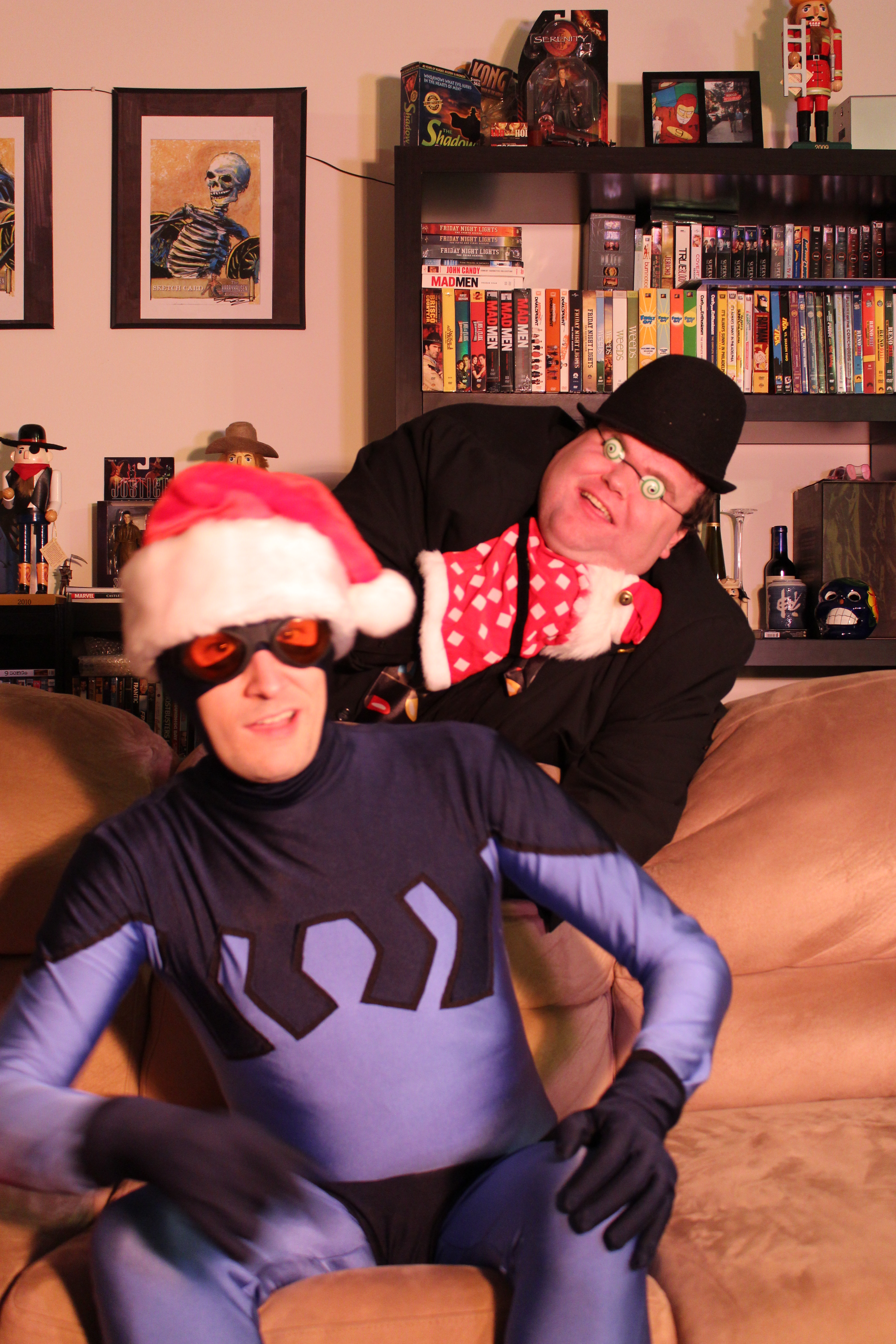
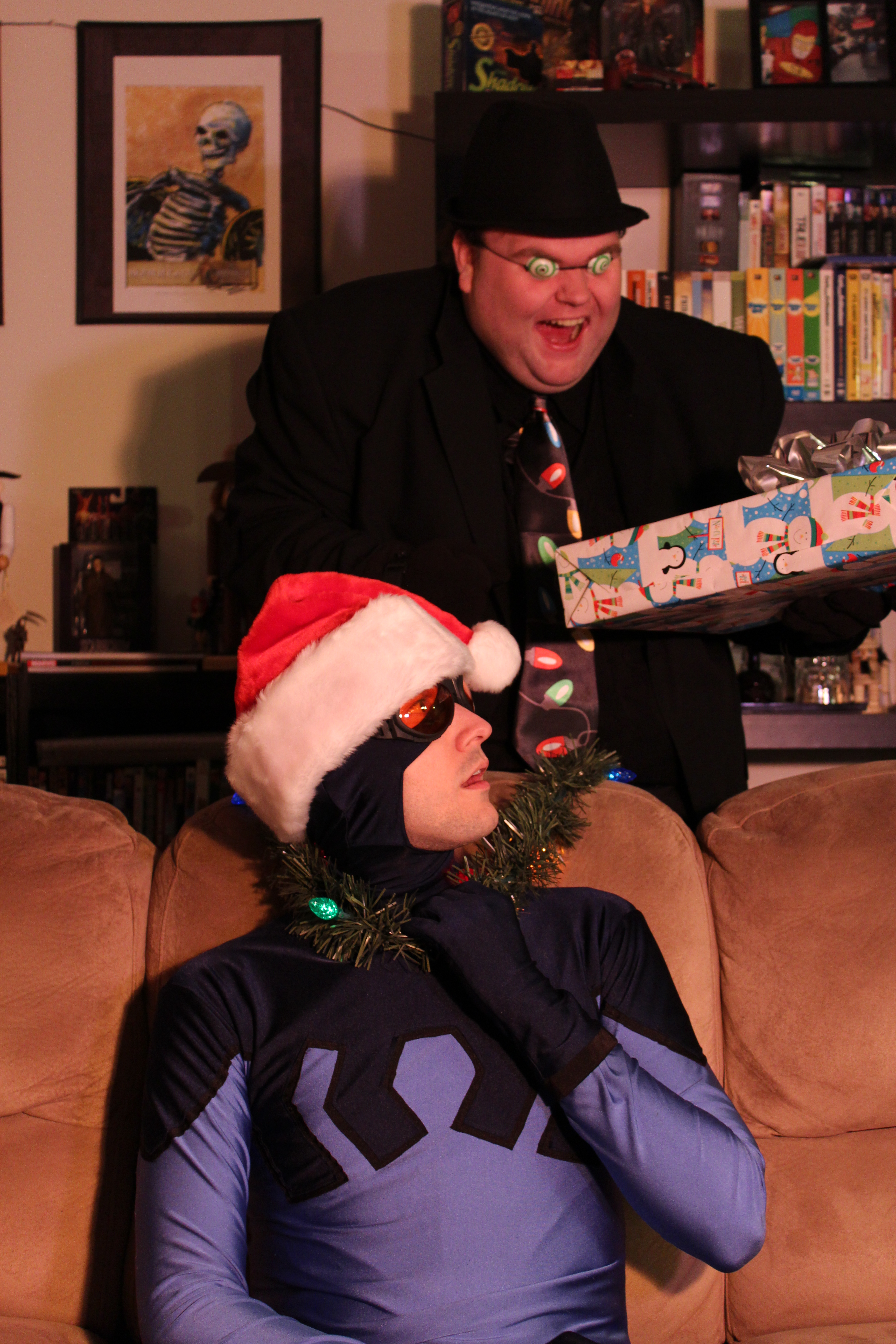
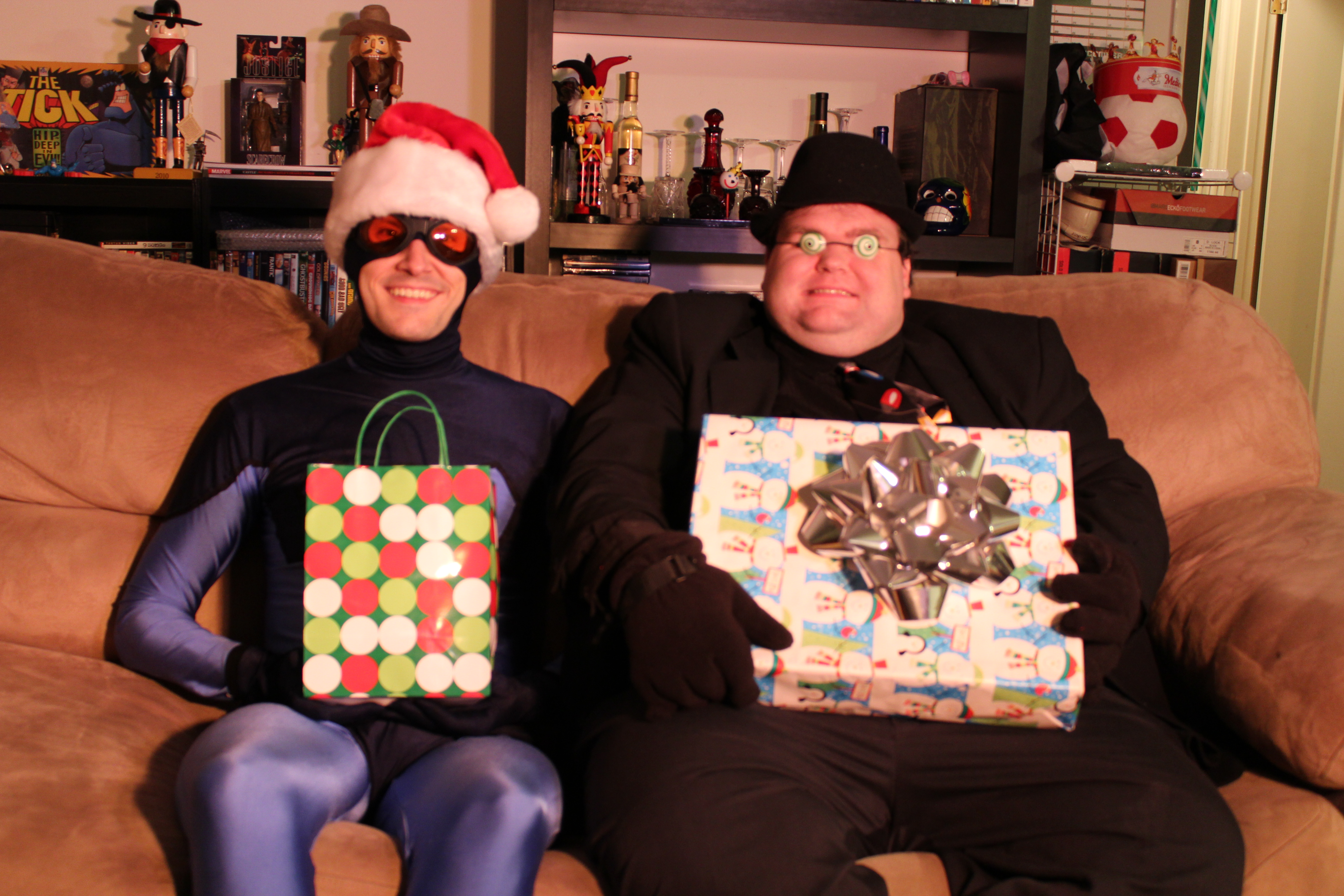
Merry ChristmasFrom: THE BLUE BEETLE!!!!!!!!!!!
Posted: December 23, 2011 | Author: Donald | Filed under: Uncategorized | 52 Comments »And Dr. Hypnovert!!!

From all of us here at Rumblespoon Productions, have a safe and fun Christmas.
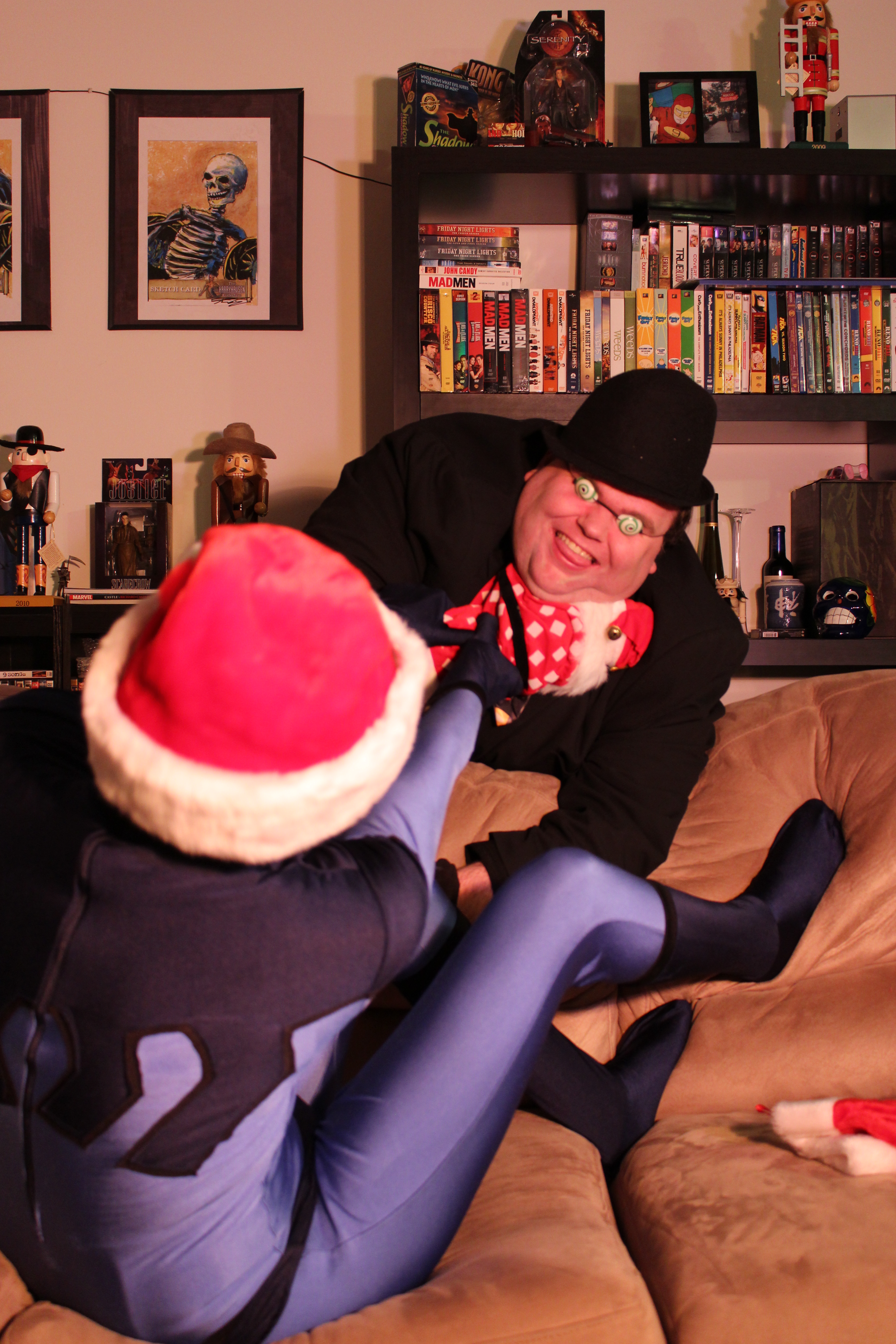
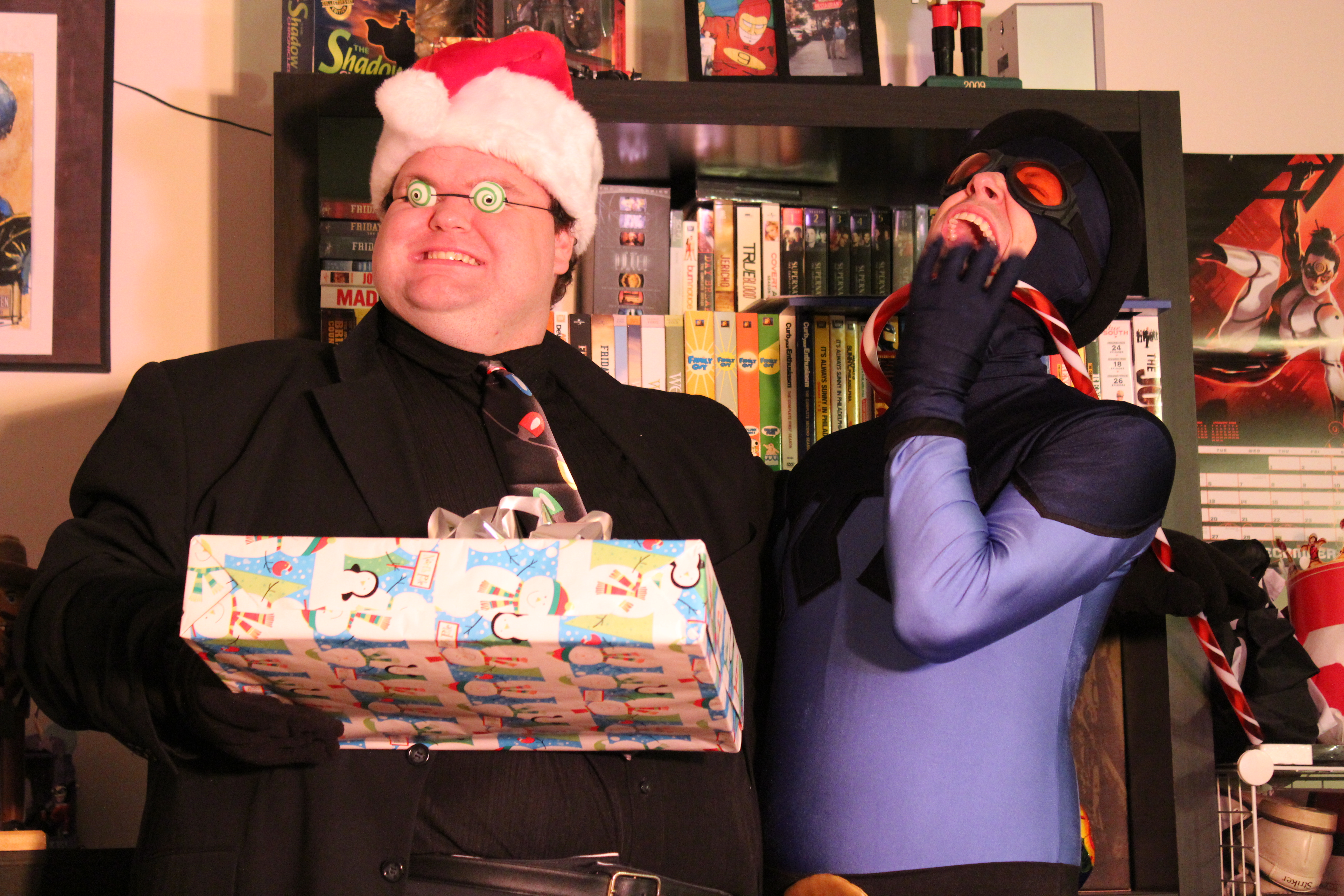
Final Photo Shoot Disaster For Blue Beetle!
Posted: December 22, 2011 | Author: Donald | Filed under: Uncategorized | 1,791 Comments »
This is it, kiddies…the final chapter in a grueling 4 hour photoshoot with Ted and Dr. Hypnovert!


Tintin….Herge’s World!!!
Posted: December 22, 2011 | Author: Donald | Filed under: Uncategorized | 1,765 Comments »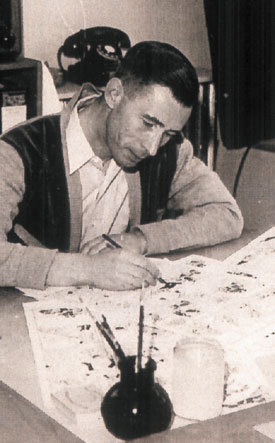
It’s impossible to get an understanding of Tintin and his world without taking a look at his creator, Hergé. This is very important because the Tintin strip became his life’s work, his magnum opus, and the progression of the character and the series was greatly affected by Herge’s personal life. Indeed, Tintin is essentially Herge — though the man himself never admitted to as much. He once claimed that Tintin was based in part on his brother (who was an officer in the Belgian army), and though this may be true, Tintin and his creator are, essentially, one in the same.
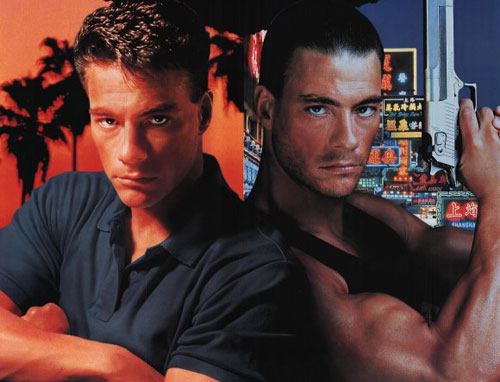
Or twins from Belgium!
Herge (pronounced Air-Jay; a sort of nonsense pen name made from the French pronounciation of his initials reversed — RG, real name: Georges Prosper Remi) was born May 22, 1907 to a middle-class family in Etterbeek, Brussels. Unlike many artists of note, Herge’s background wasn’t particularly dramatic or compelling — his father worked in a candy store, and his mother was a homemaker, and AN ASSASSIN!

Just kidding…..or am I?
He once described his young life in Etterbeek as being monochromatic and gray…very boring. Like any other kid, he took to escapism, voraciously devouring the fantasies of many British and American authors — things like Treasure Island, Robinson Crusoe, the novels of Mark Twain, etc. He also took to drawing as a hobby, and particularly enjoyed trips to the cinema. But probably the biggest influence in his young life came from scouting. It was here that young Herge saw the first publication of one of his comic strips (in the scout newspaper), and it was also here that young Georges started to develop his personality in earnest. Scouting made sense to him, and it was these teachings and philosophies that stayed with him and informed his life and work. When reading a Tintin adventure, Tintin does come off as something like the world’s best boy scout, and I seriously doubt that it’s a coincidence.
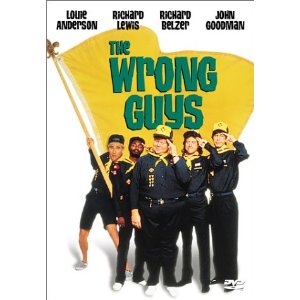
Yep, this movie exists…
It also makes a lot of sense that Steven Spielberg would respond so strongly to his material, being that Spielberg more or less came of age in the ranks of the scouts as well. Regrettably, Steven Spielberg was not in the movie, The Wrong Guys, he was busy making millions on good/quality movies.
Up Next…Tintin Begin Again!
Josh Davis, when not blogging, trained Chuck Norris to be who he is today.
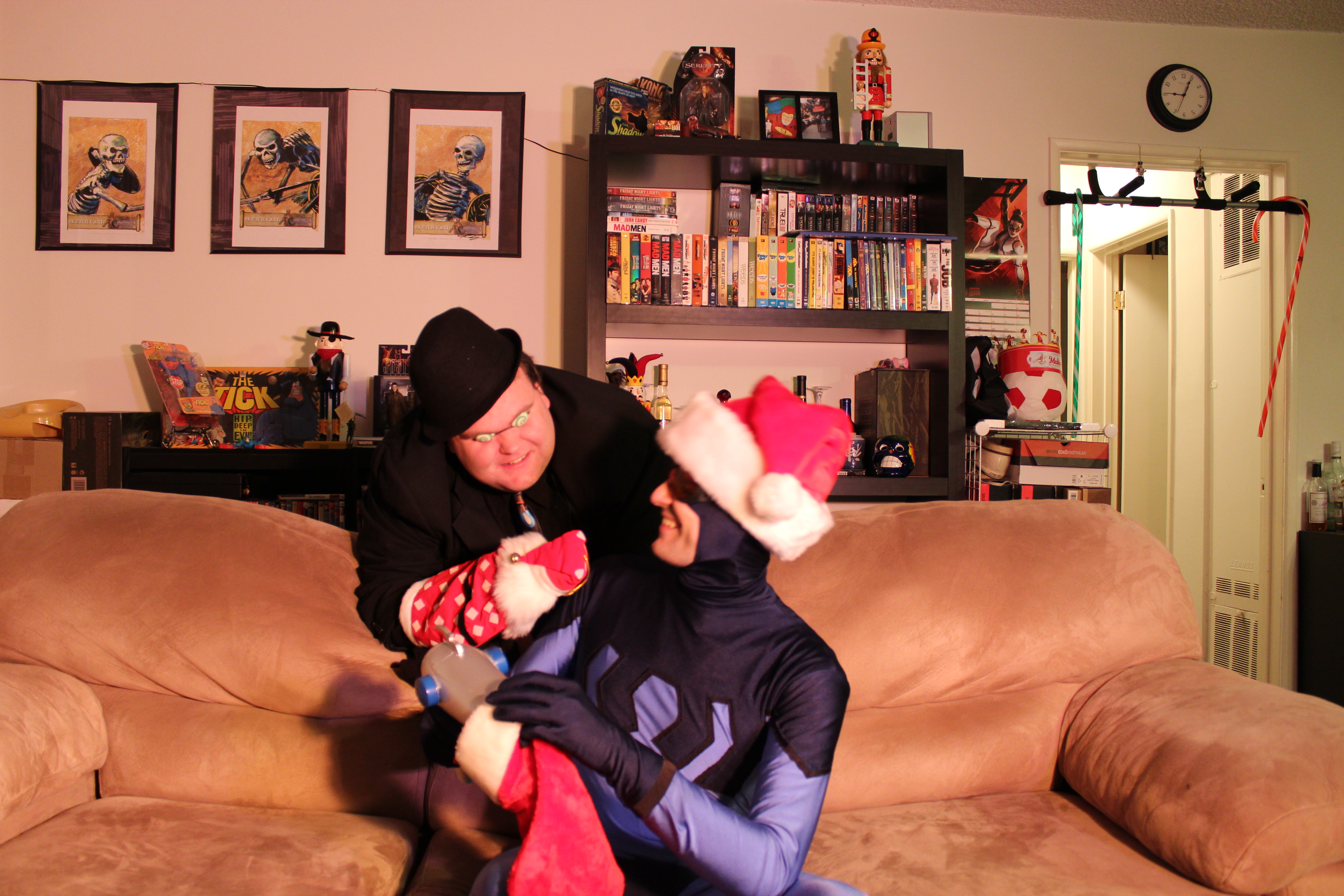
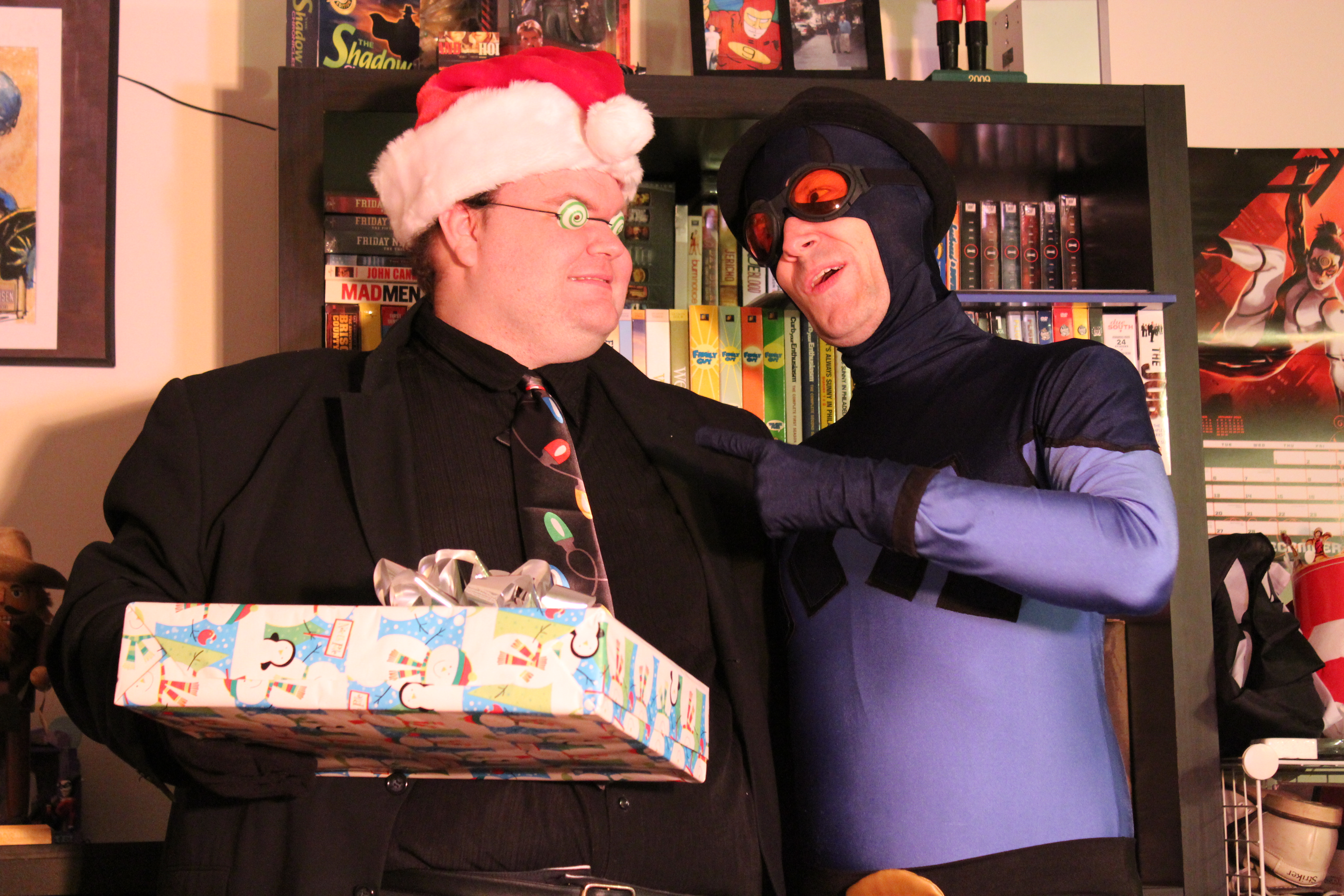
Ted Kord Christmas Photo Shoot…..Part 2!
Posted: December 21, 2011 | Author: Donald | Filed under: Uncategorized | 2 Comments »Part two of how a photo shoot can go wrong!
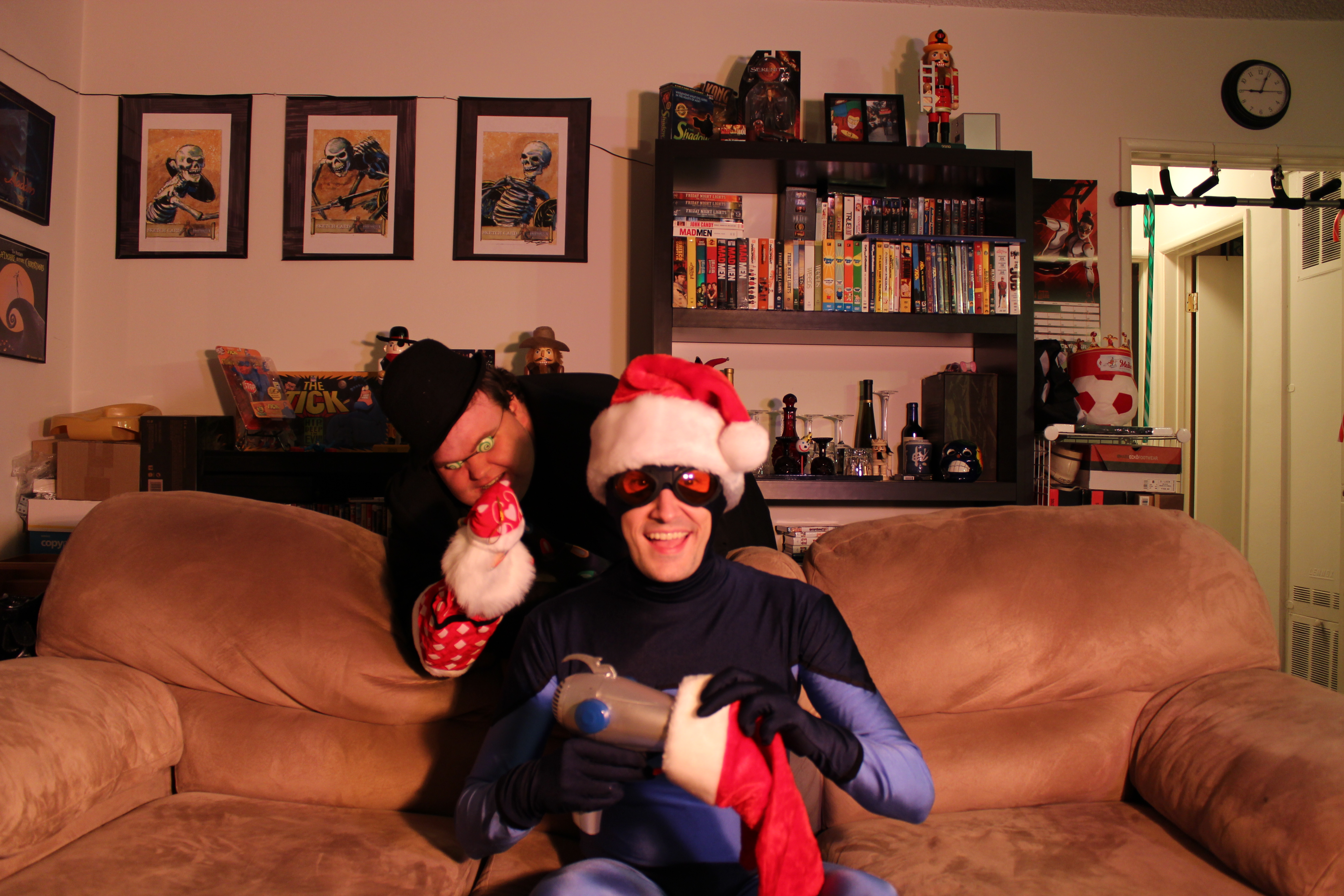
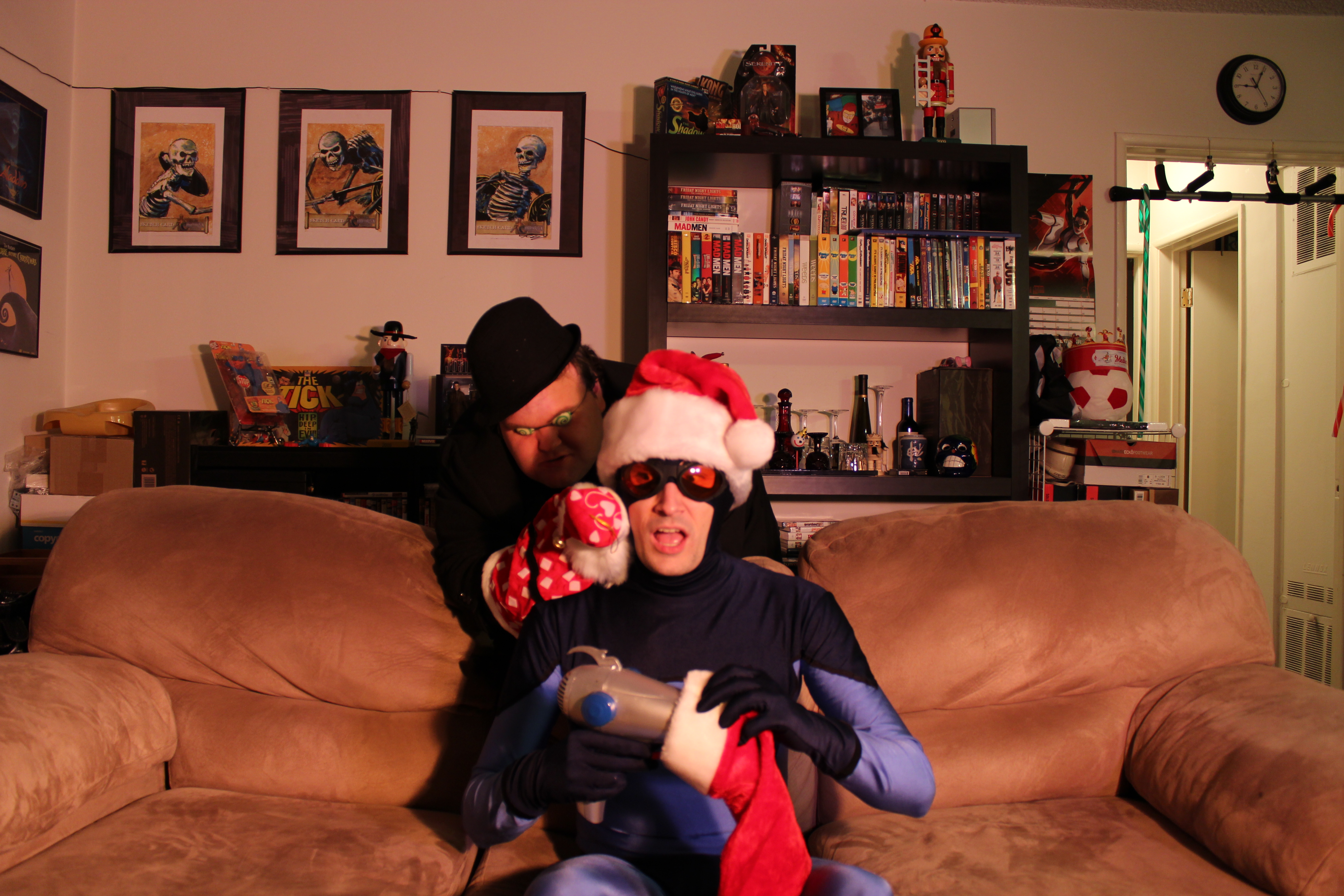
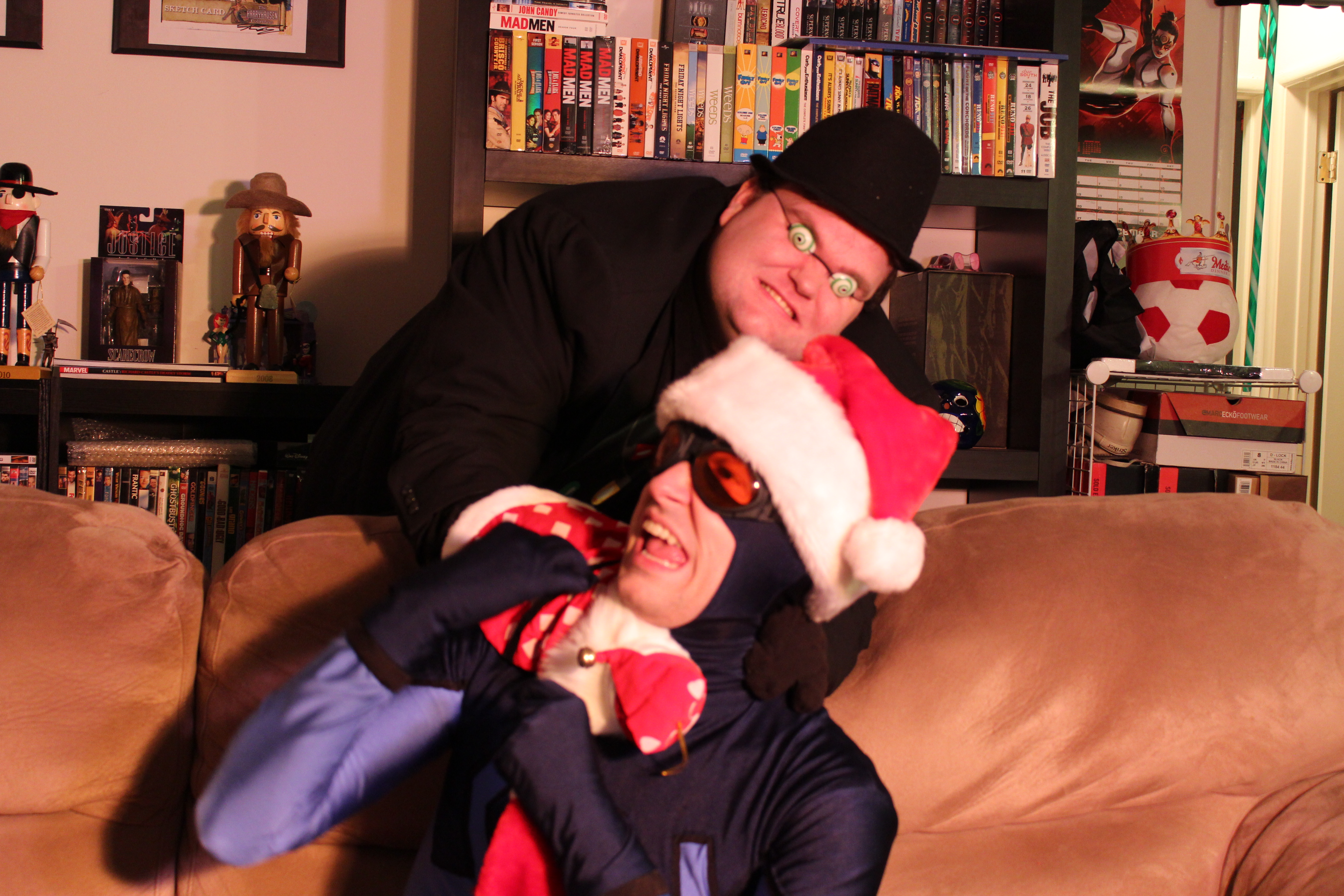
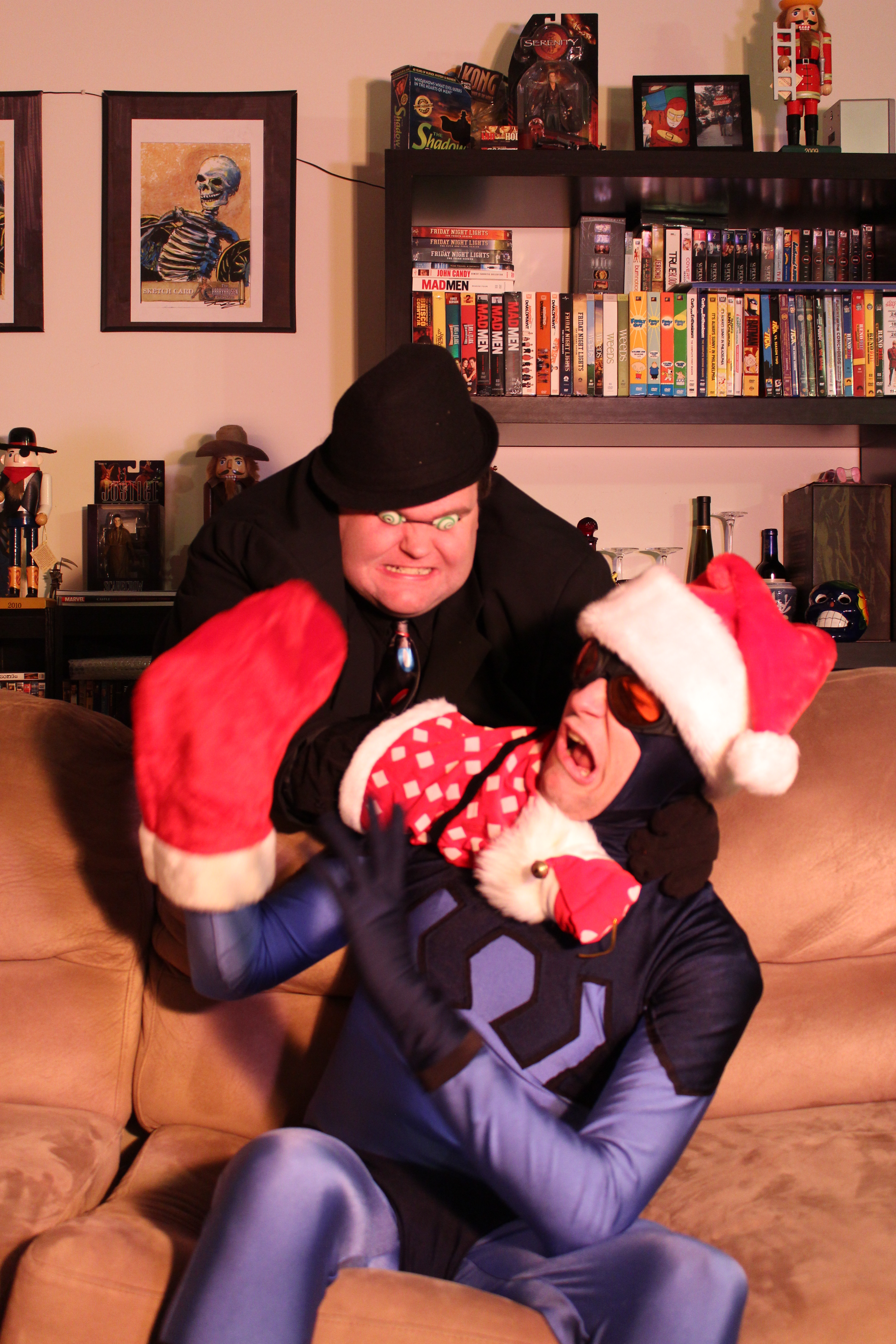
The Good, The Bad, And The Tintin!
Posted: December 21, 2011 | Author: Donald | Filed under: Uncategorized | 163 Comments »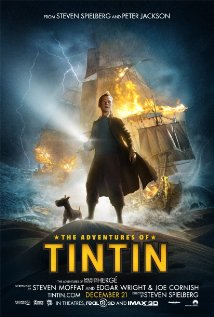
While the film is indeed flawed, there are so many things this film does amazingly well. From the onset, it may seem like Spielberg is taking something of a step backwards in his career by making this film. It certainly feels nothing like his seasoned vet pictures of recent years — this is straight-up 80’s Amblin material all the way, made all the more obvious by the decision to include the Amblin logo at the beginning of the film.

Is that a little kid in that basket?!
But I can completely understand his desire to make this film. Outside of his obvious love and protectiveness of the source material, Spielberg has always been a very vocal fan of animation, and has produced a sizeable amount of animated theatrical and TV animation.
Animaniacs, anyone?
His love of the exaggerated, pronounced, sometimes three-dimensional visual language of cartoons is reflected at times in his films through his choices of lenses and camera movements. But, with the advancement of mo-cap animation, I think Spielberg finally found a technology that could allow him to direct an animated film in a way that he knew how. He’s usually never content with being nothing less than a trendsetter, and it’s flat-out scary how good the motion capture animation is in this film. For the very first time, I did not get a sense of lifelessness from the eyes of the characters. The faces are so realistically expressive and well-rendered that there are times where I forgot I was watching an animated chartacter.
And see, this is what held my attention after the movie was over. I kept thinking of the possibilities now open to just about ANY professional filmmaker who may be curious to try their hand at computer animation. You get the sense that Spielberg is having a lot more fun than he has in a long time — with animation affording him to tell his story in a far more precise way, he frees his camera up and designs shots and sequences that FEEL like live action and carry the requisite weight and spectacle, but were completely rendered in a computer. He stages SEVERAL sequences with unbroken shots lasting several minutes, and it’s in these shots where Spielberg feels more alive than he has in a good while.
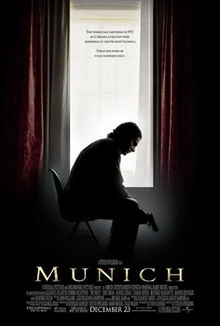
He died twice while making this film.
On the whole, it seems that we’re progressing into a stage where, with the right tools, the right vision, and the right amount of green, you can convincingly create anything. We just need the stories to catch up.
And this goes to show why the next Tintin film needs a far meatier story. All this amazing technology in our face — it’s distracting. We need something underneath it to compliment it. We need a story suited for the sweeping style Spielberg and Jackson are giving this series. And with Jackson taking the reigns in the next installment, I have my fingers crossed that the right steps are taken to ensure the life of the series. Why? Well…’cause I liked this Tintin stuff. It made me feel like a kid again.
(SPOILERS BELOW)
RANDOM OBSERVATIONS:
THE OPENING TITLE SEQUENCE – Very nifty, yet strangely reminiscent of the title sequence for Spielberg’s Catch Me If You Can. Even Williams’ title theme was jazzy and somewhat like his Henry Mancini-inspired stylings for that film, but also sounding like it had been dipped in European sauce.

Holy crap, it does exist!
THE SAKHARINE/RED RACKHAM CHARACTER – I had absolutely no idea this was Daniel Craig until about an hour into a film. It took me that long to shake the fact that Sakharine looked a LOT like a younger Spielberg to me.
THE 3-D VERSION – I didn’t see it. From my understanding, this film was designed for 3-D, so that alone ensures my return to the theater when this is officially released to see it that way. I’m very interested in seeing how somoene like Spielberg uses 3-D. He’s always tried to make his images as “three dimensional” as possible on a 2-D plane. With this, Spielberg said that he very consciously designed his style and shots working in three dimensional plane. He said that before, he would always close one eye when designing shots so he could approximate how others would see it — but when creating the shots for TINTIN, he always had both eyes open.
Up Next…Herge’s World!!!
Josh Davis once held an opponent’s wife’s hand in a jar of acid….at a party.
The Adventures of Tintin: The Secret of the Unicorn…Exposed!
Posted: December 20, 2011 | Author: Donald | Filed under: Uncategorized | 2 Comments »

Just in case we get a little lost along the way, I want to make it clear that I loved THE ADVENTURES OF TINTIN: SECRET OF THE UNICORN. I strapped in, I took the ride, I got worn the hell out, I got off…and I thought about the mechanics of the ride instead of the ride itself.
The ride was at the Candy Mountain!
I think this is because Spielberg and co. got the movie 2/3 right; he nailed just about everything except in the character arena, and when you’re dealing with a far bigger canvas than the usual 4’X6″ Herge comic panel, you need those little touches to help the picture feel full. As it stands, in terms of pacing and overall story construction, the movie most closely resembles Spielberg’s own INDIANA JONES AND THE TEMPLE OF DOOM — set piece after set piece with very little breathing room in between.
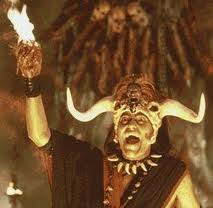
Kali-Mah!!!!!!!!!
Sure, Spielberg stages these scenes with stunning aplomb and more than satisfies you in the visceral arena, it just seems very curious that he would choose not to develop the characters more, to give them more than just a few seconds to talk to one another and reveal things that just allow them to be alive — to maybe say one little thing that doesn’t contain some important plot information. Granted, this style is reflective of the source material — throughout the years, we never really got to know Tintin, Haddock, Calculus, the like. And I can imagine how Spielberg probably feels; when handling an iconic property that was not of his own creation, he felt obligated to stay out of the material’s way and not try to inflict anything upon it that didn’t come from Herge’s own brush. He has far too much respect for Herge and his creation to change it too drastically, from both a visual AND a storytelling point. And, just this once, it works. Being that it’s the first film of a planned trilogy, it manages to do the setup job fairly well. But some gears are gonna have to be switched in the next installment if it’s going to last.
Up Next….The Good, The Bad, And The Tintin!!!!!!!
Josh Davis contributes to Rumblespoon as part of a community outreach program…..
SPAM!!!
Posted: December 20, 2011 | Author: Donald | Filed under: Uncategorized | 2 Comments »
No, not the meat, or lack thereof, but the crazy amounts of advertisements spammers attempt to post on our site. Some so bad that I feel the need to share with you from time to time……
Here is one example:
I’ve been surfing online more than three hours today, yet I never found any interesting article like yours. It’s pretty worth enough for me. In my view, if all website owners and bloggers made good content as you did, the web will be much more useful than ever before.
Now if my english was not so good, I would love comment that this has made for me now… :/
Your spam-filtering pal,
Dwaine
TINTIN IN AMERICA! By: Joshua Davis
Posted: December 18, 2011 | Author: Donald | Filed under: Uncategorized | 1 Comment »TINTIN IN AMERICA
Originally published in Le Petit Vingtieme from September 3, 1931-October 20, 1932. Colorized in 1946.
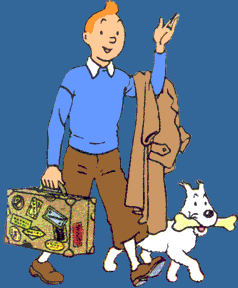
Welcome, one and all, to the first of my Tintin discussions here at Rumblespoon. As a good many of you are aware, Steven Spielberg has directed a film based on the Tintin works of Herge. Specifically, it adapts (or, more properly, uses elements of) three of Herge’s comic albums: The Crab With The Golden Claws, The Secret Of The Unicorn, and Red Rackham’s Treasure. The latter two are actually one long adventure and is widely considered to be the greatest Tintin story ever created.
It’s been said, around campfires and family picnics, that Spielberg first became aware of Tintin while he was shooting Raiders Of The Lost Ark. The comics were recommended to him due to their perceived similarity to Indiana Jones and his world. He fell instantly in love, calling it “Indiana Jones for kids”, and snapped up the rights. After that, Spielberg sat on them for years, seemingly working on other projects. Once Spielberg stood up, he had a script commissioned that had Tintin fighting ivory hunters in Africa. Nothing ever came of this, and Spielberg sat back down on the property until now (Some say he was trying to “hatch” an idea!).

Spielberg hired people to egg-sit, while he filmed other movies.
If asked my opinion, Spielberg really wanted to find a way to preserve Herge’s world and style on the screen. This is what led him to the arena of animation — MO-CAP animation. There, with the help of Peter Jackson, he could truly bring Herge’s images to life.
However, this seems to be the first time in history that Spielberg is directing a film that has its roots in something not readily accessible or identifiable to the American public. Sharks? Yes, we know sharks. World War II? But of course! Aliens? Sure, my cousin was abducted (Or so he would have you beleive.).

I was sittin right here when they came to get me!
But what about A fearless, French boy reporter that travels the globe to be there as the action happens and do his part to help right wrongs? Most people aren’t familiar. What IS Tintin? Why does Spielberg love this so? Why does the REST OF THE WORLD love this so? Why isn’t America as familiar with this comic strip hero? Solid, concrete answers to those questions either aren’t easy or don’t actually exist, so I decided to take it upon myself to dive into the world of Tintin and see what this is all about. How could I do this? I watched the movie…My review is next! Dun Dun Dunnnnnnnnn!!!!
Josh Davis has been writing for years…some of his best work has been done underwater!
A Very BLUE Christmas!
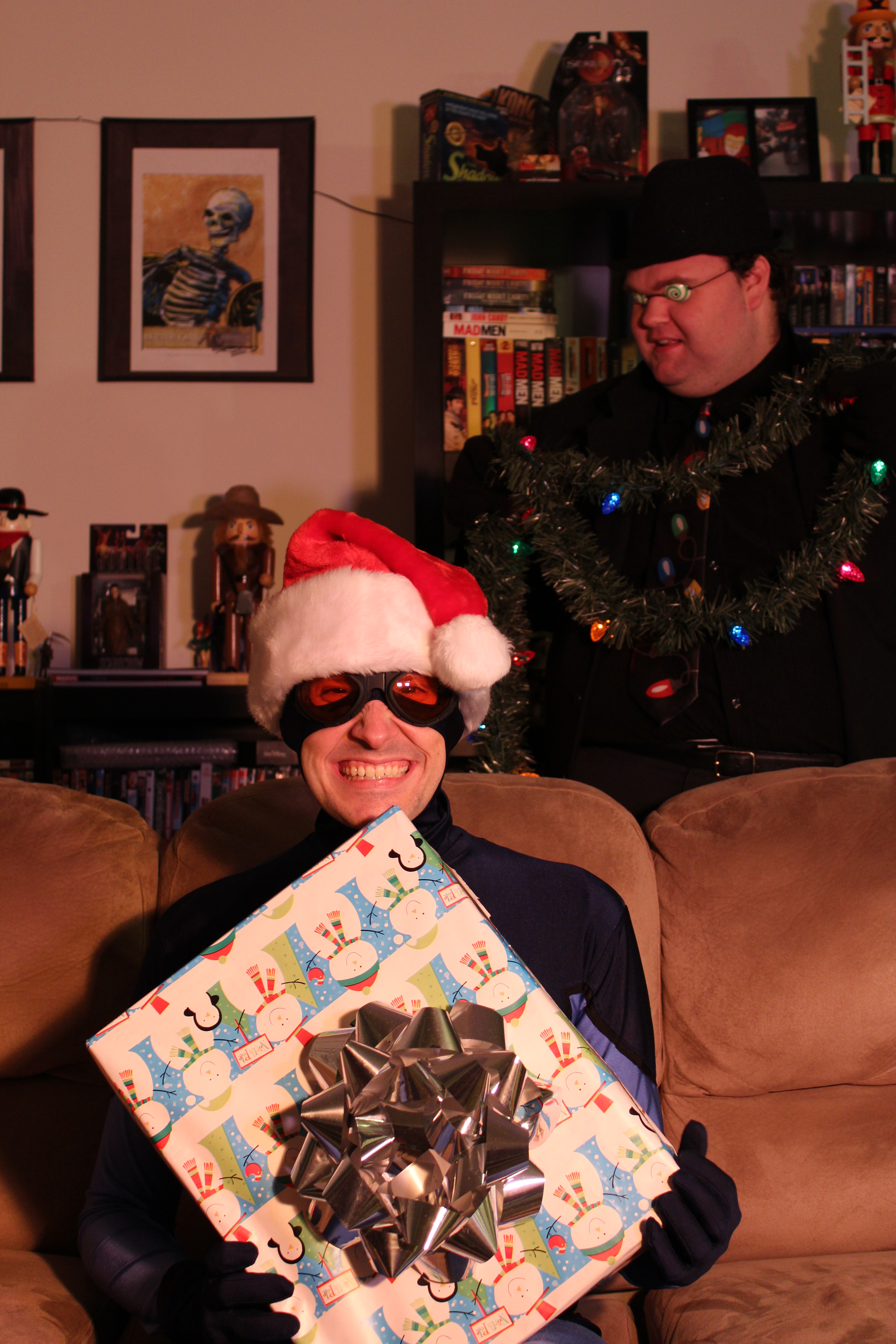
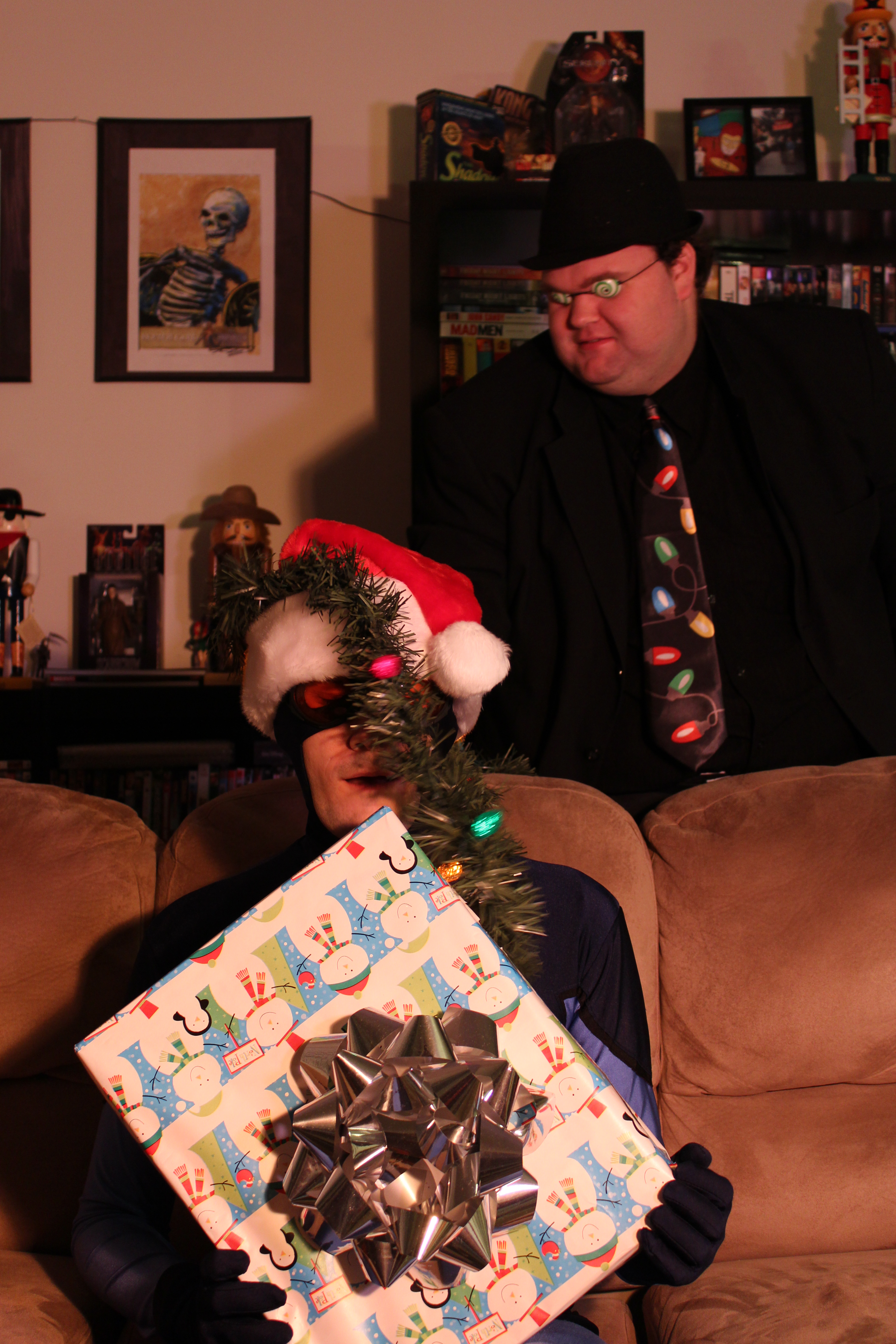
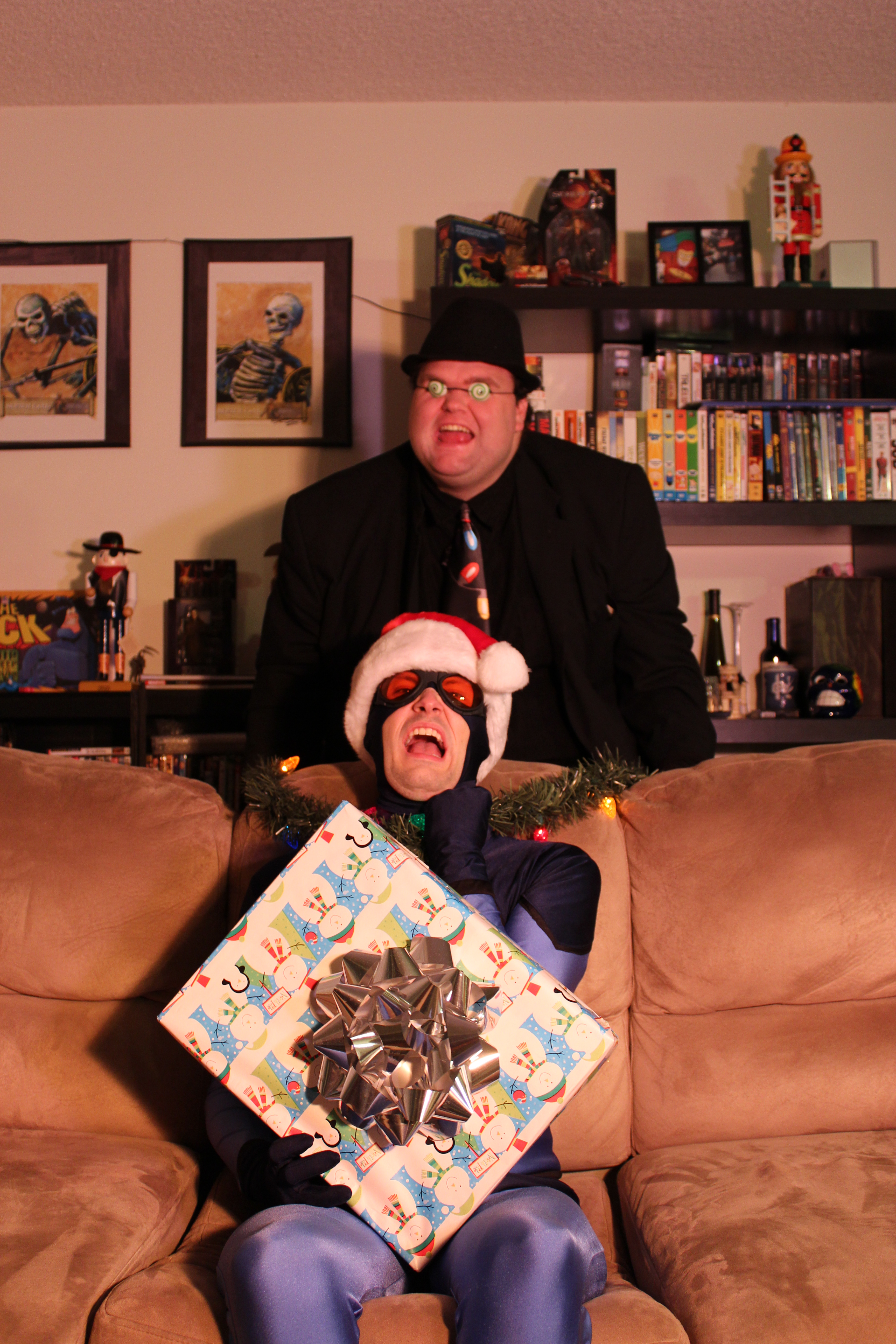
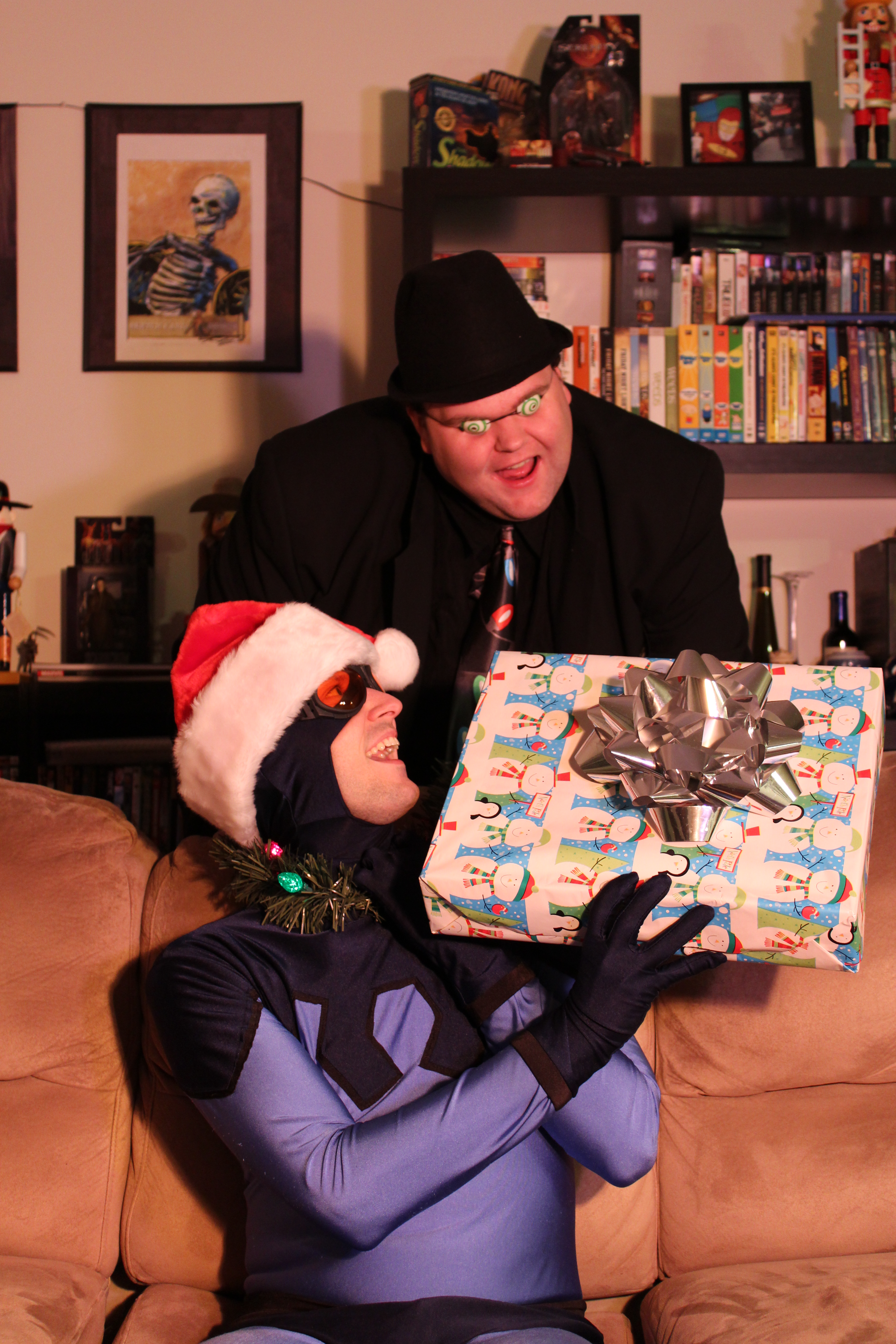
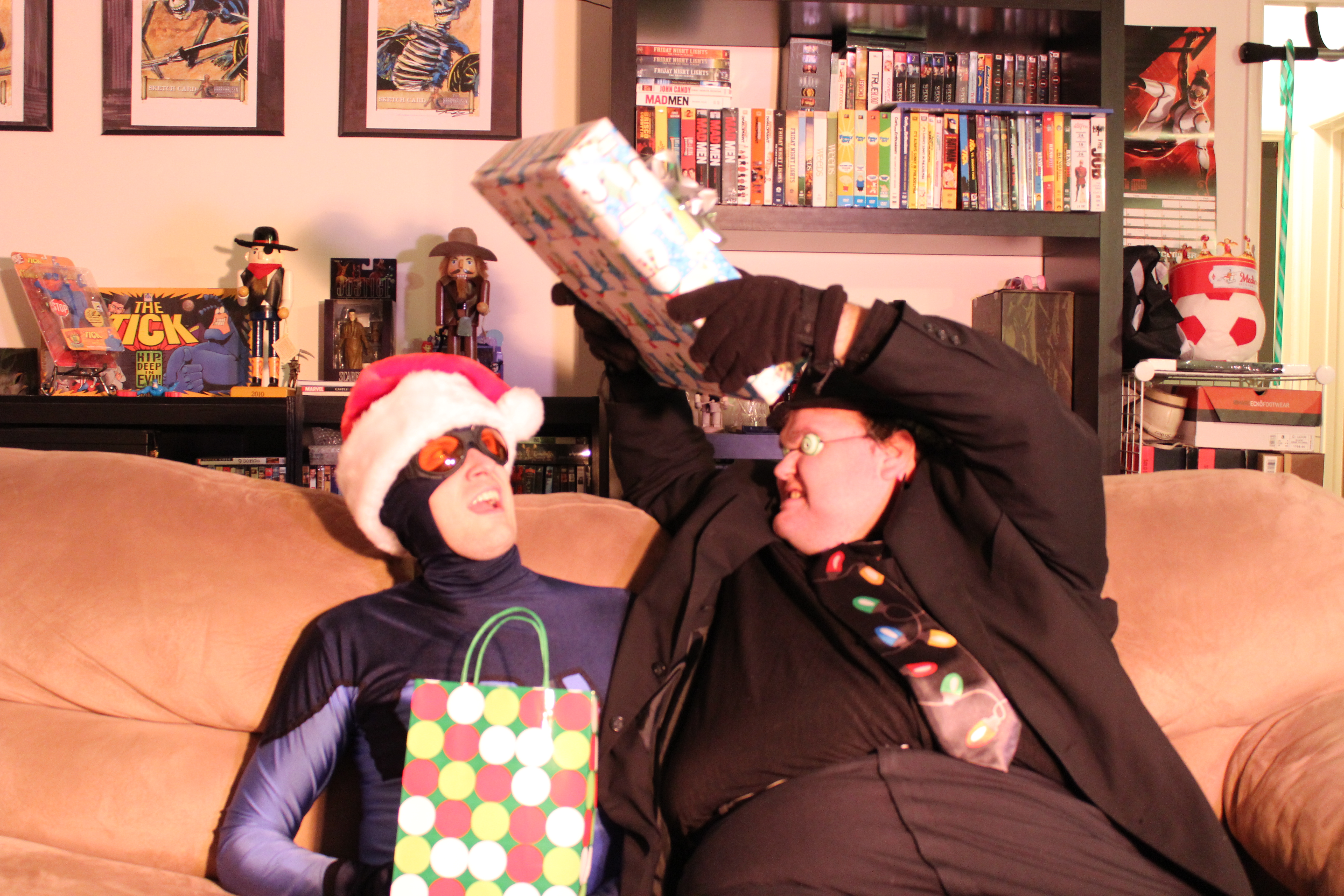
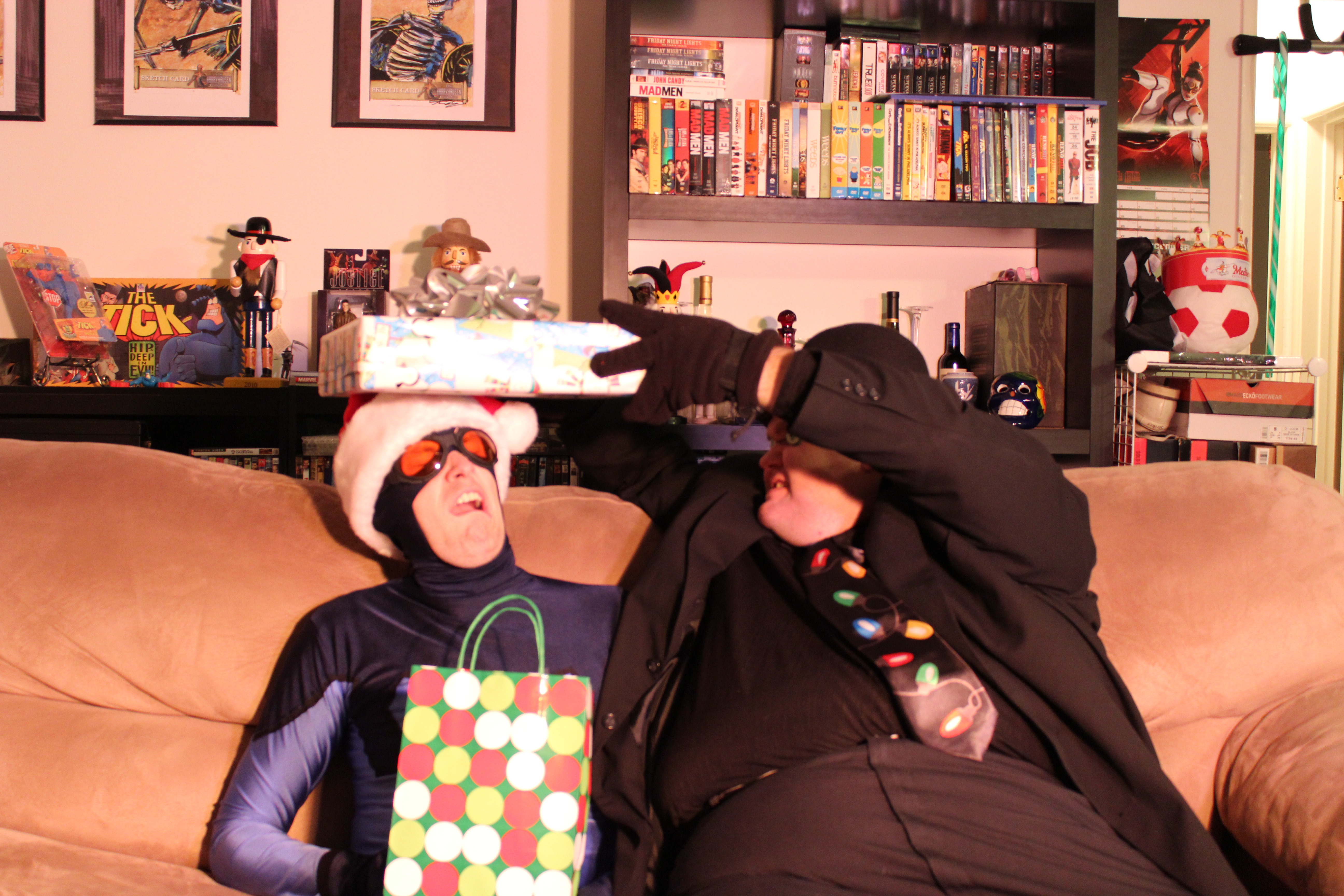
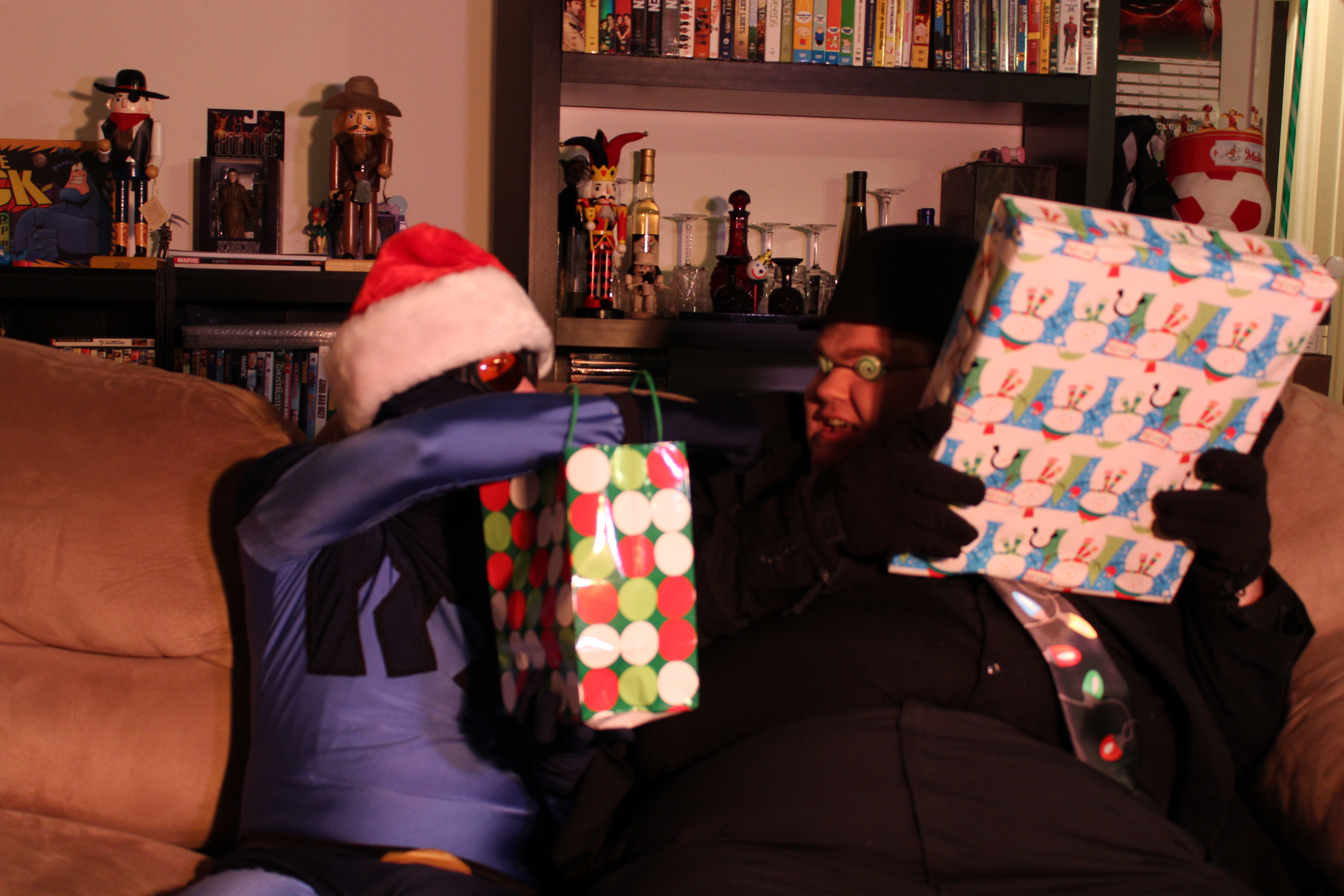
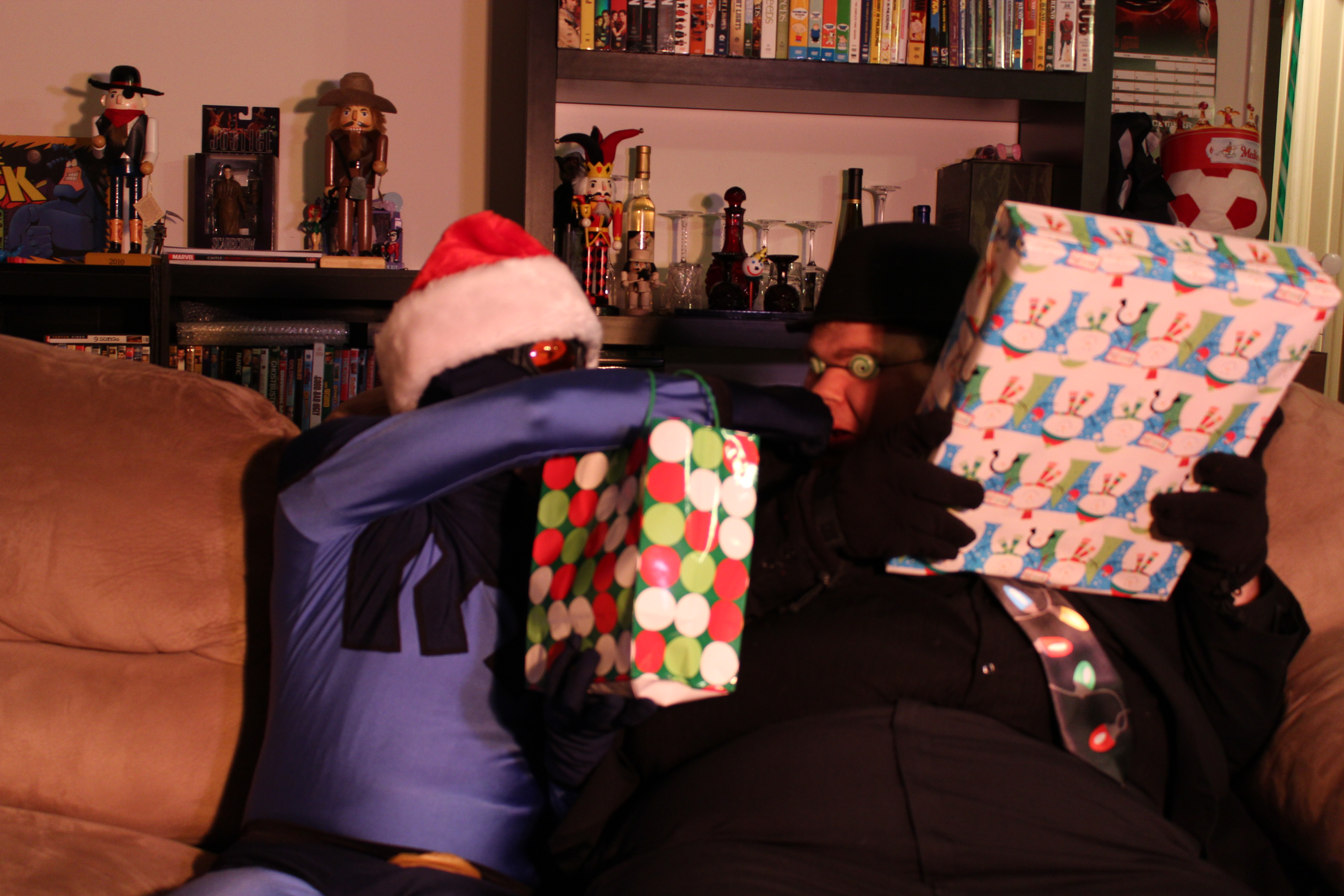
Posted: December 16, 2011 | Author: Donald | Filed under: Uncategorized | 2 Comments »Dr. Hypnovert and Ted Kord, AKA, The Blue Beetle had a Christmas Photo Shoot…
This is what happened!

G.I. Joe Retaliation…AKA, G.I. Joe 2!!!!
Posted: December 14, 2011 | Author: Donald | Filed under: Uncategorized | Comments Off on G.I. Joe Retaliation…AKA, G.I. Joe 2!!!!
This looks soooo much better than the first one!
REAL Short Box Subscribe!


